


Dr. E Manuals
Yamaha XV500 XV500K Virago 1983-1986 Service Manual
Yamaha XV500 XV500K Virago 1983-1986 Service Manual
Couldn't load pickup availability
1983-1986 Yamaha XV500 XV500K Virago Service / Repair / Workshop Manual
Instant download after purchase, in PDF form, NOT a physical book.
This manual contains 174 pages in English Language, it is the only manual you will require to maintain, repair and service your Yamaha XV500 XV500K Virago.
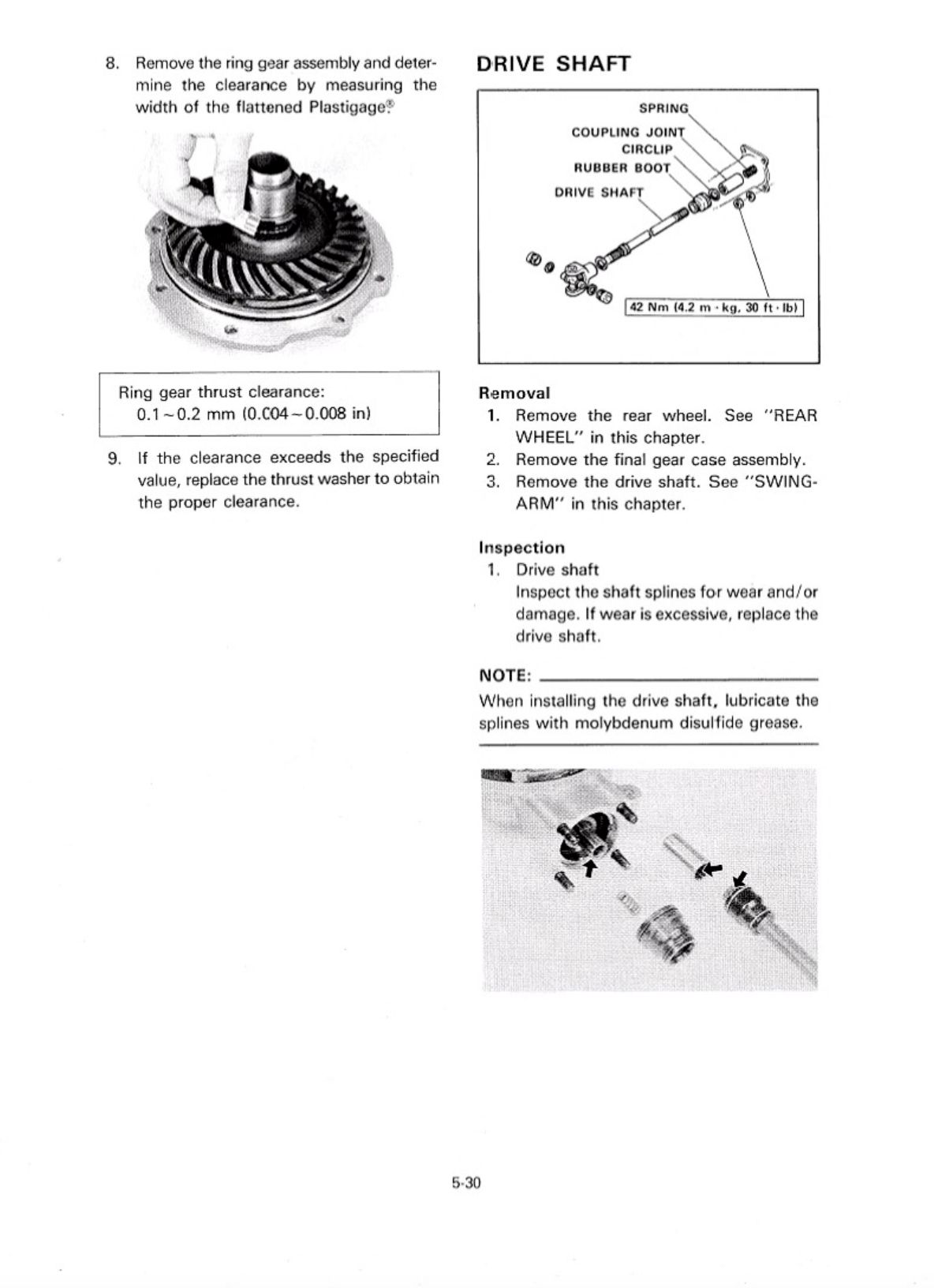
Sample pages and table of contents can be seen in the third product picture, please make sure you are happy with the quality of the manuals before purchasing.
Suits Models from 1983, 1984, 1985, 1986
If you have any issues downloading/accessing your manual, please contact us so we can fix this for you.
Share



XV500K Virago (1983-1986): Cycle World's Own Verdict — "The 500 Twin, Scaled Down From the Virago Theme," With Some Reservations Worth Knowing
Cycle World's own contemporary 1983 road test frames the genuine business logic behind this exact bike's creation directly: "when the Virago 500 began its trip down the drawing boards, Yamaha's designers must have figured the task was more like play, a working vacation perhaps. The original Virago was a 750, an air-cooled V-Twin with shaft drive and full cruiser treatment, as in stepped seat, small tank and high bars. The model hit the target market right on center and the Virago 750 was Yamaha's sales hit of the year. Traditional looks, traditional engine configuration, so it made perfect sense to take another old-time favorite, the 500 Twin, and scale down the Virago theme to fit the smaller engine. Lower seat, lower price, proven looks and engineering, it's bound to work. And so it does, but with some reservations."
Power comes from a 494cc air-cooled 4-stroke V-twin, fed by two BDS34 Mikuni carburetors, delivering a claimed 33 hp with roughly 30.4 lb-ft of torque at 7,000 rpm through a genuine shaft final drive — a real mechanical distinctive shared across the whole Virago family, versus the chain- or belt-drive setups most rival cruisers of the era ran. Cycle World's own dyno-adjacent contemporary comparison against Yamaha's own sportier Vision offers genuinely useful real-world performance context: at "402 lb." with tanks half full, the Virago 500 turned a "13.70 sec." quarter mile at "93.55 mph" trap speed, and Cycle World's own testing found it "actually quicker" than the more powerful Vision in top-gear roll-on acceleration — "40-60 mph in 5.4 sec. vs 5.8 for the Vision" — a genuine testament to how well this smaller-displacement V-twin's torque curve suited real street riding despite its modest peak output.
Autoevolution's own confirmed 1983-model specification sheet lists a traditional telescopic fork delivering 150mm of travel up front, paired with a monoshock rear end offering 100mm of travel — genuine Virago-family suspension architecture, sharing this fundamental layout with the larger-displacement 750, 920, and 1000 siblings sold alongside it during the same era. Braking used a 298mm front disc with a dual-piston hydraulic caliper on the 19-inch front wheel, paired with a rear drum brake on the 16-inch rear wheel. Standard equipment throughout this range included a wide, pulled-back handlebar, a round headlight, a one-piece dual seat with pillion grab handle, a dual exhaust system with a silencer on each side, and aluminum wheels — genuine period-correct Virago-family styling cues consistent across the whole XV lineup Yamaha was building simultaneously in the early-to-mid 1980s.
Wikipedia's own broader Virago-family history confirms a genuinely important electrical caveat worth checking on any early example within this range: Motorcyclist magazine documented "a design flaw in the starter system" affecting "early Virago models (1982 and 1983)" — meaning a 1983 XV500 specifically falls within that flagged window, worth verifying before assuming trouble-free starting on an unrestored example. This exact 1983-1986 XV500K generation ran alongside Yamaha's broader family of Virago-badged V-twins during the same production window — the 750, the tariff-motivated 700 (built specifically to dodge the 1983 US import tariff on motorcycles over 700cc), the 920/1000, and the eventual 1100 — all sharing the fundamental pressed-steel backbone frame and shaft-drive V-twin architecture that defined Yamaha's entire cruiser lineup through this era, before the smaller-displacement Virago 535 took over the entry-level role starting in 1987.
This factory service manual covers the procedures, torque specs, and diagrams needed to keep a 1983-1986 XV500K Virago running the way it was built to.
-
Manual Sourcing
We strive to use freely available sources. Some manuals may be scans or photocopies of older originals. Sample previews are shown on the product page, please review them before purchase to ensure quality meets your needs.
-
Copyright
This material is shared in accordance with the GNU General Public License (GPL), GNU Lesser General Public License (LGPL), or designated as Freeware, all of which allow free and open distribution. Additional information is available on our Copyright & Content Disclaimer Page
-
Refunds
Due to the nature of digital products, all sales are final. We recommend reviewing the sample preview on the product page to ensure the manual meets your expectations before purchase. Refunds will not be issued for issues related to content quality already disclosed or shown in the preview.
