


Dr. E Manuals
Yamaha SR400 2010-2021 Service Manual
Yamaha SR400 2010-2021 Service Manual
Couldn't load pickup availability
Yamaha SR400 SR 400 2010 - 2021 Service / Repair / Workshop Manual
Instant download after purchase, in PDF form, NOT a physical book.
This manual contains 342 pages in English Language, it is the only manual you will require to maintain, repair and service your Yamaha SR400, using this manual you ensure that your motorbike is repaired to manufacturer standards / specification, whether you are using OEM or genuine Yamaha Parts.
Suits Models from 2010, 2011, 2012, 2013, 2014, 2015, 2016, 2017, 2018, 2019, 2020 and 2021.
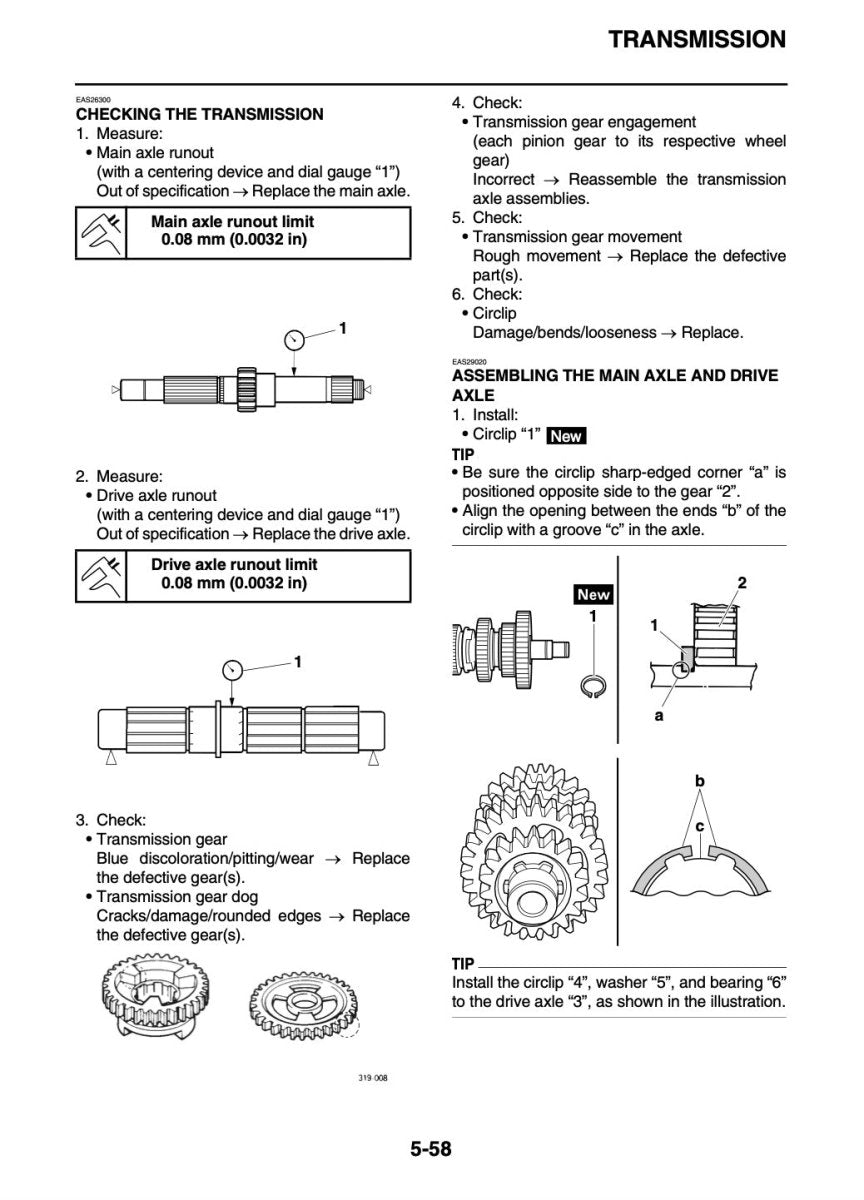
Sample pages and table of contents can be seen in the third product picture, please make sure you are happy with the quality of the manuals before purchasing.
Features Chapters: General Information, Specifications, Periodic Checks and Adjustments, Chassis, Engine, Fuel System, Electrical System, Troubleshooting.
If you have any issues downloading/accessing your manual, please contact us so we can fix this for you.
Share




SR400 (2010-2021): The Fuel-Injected Era of Japan's Longest-Running Single-Cylinder Cult Classic
Wikipedia's own account confirms this is genuinely the final chapter of an extraordinary production run: "Yamaha has marketed the SR400 in the JDM since model year 1978, with a production hiatus for model years 2008–2009. Beginning with model year 2010, the SR400 had fuel injection and a catalyst muffler to comply with tighter emission restrictions" — the genuine turning point that brought this classic single into full modern-emissions compliance while preserving essentially everything that made it beloved in the first place. Bennetts' own review captures the bike's enduring, almost defiantly old-fashioned character even in this later era: "the SR400's air-cooled single engine has remained basically the same since it was first introduced all those years ago and while the latest model does have fuel-injection, it still has a kickstart with no option of any electrical assistance when it comes to getting it going."
Power comes from a 399cc air-cooled SOHC single-cylinder engine with 2 valves, an 87.0mm x 67.2mm bore and stroke, and an 8.5:1 compression ratio, delivering a claimed 23-24 hp at 6,500 rpm and roughly 20 lb-ft of torque at 3,000 rpm through electronically controlled fuel injection replacing the earlier carbureted setup. Wikipedia's own technical account details the genuinely clever dry-sump engineering underpinning this whole platform: "the downtubes of the motorcycle's frame serving as the engine's oil reservoir and cooling system, thereby eliminating the need for an external oil cooler, reducing engine pumping losses, and allowing increased ground clearance as well as reduced overall width" — a real space- and weight-saving trick baked into the fundamental design since 1978, carried forward unchanged into this fuel-injected era. Post-2010 models switched from earlier CDI ignition to transistor-controlled ignition (TCI), and a sealed VRLA battery sits under the seat.
Bennetts' own review details exactly how the kickstart ritual actually works: "the SR comes with a small viewing window on the right hand side of the cylinder head so you can tell when the piston is at the optimum position for starting (there is a decompressor lever to help you get it there with minimal effort) and then a quick kick and as well as the precise fuel-injection, a transistor ignition system gives a lovely big spark and away you go" — genuinely simple in practice despite sounding intimidating on paper. Yamaha expanded the SR400's reach considerably during this era, bringing it to Europe, Australia, and the US for the first time in 2014 after decades as a JDM-exclusive model. Styling stayed consistently faithful throughout this span: a round chromed headlight, a teardrop fuel tank, a one-piece dual seat with passenger grab rail, a chromed exhaust, and wire-spoke wheels with lightweight aluminum rims, riding on a double-cradle steel frame with a telescopic fork (150mm travel) and dual side-mounted shocks (104mm travel). Yamaha finally discontinued the SR400 in the Japanese domestic market in January 2021, closing out a genuine 43-year production run — one of the longest for any single motorcycle nameplate in Japanese manufacturing history — with a Final Edition variant marking the send-off.
This factory service manual covers the procedures, torque specs, and diagrams needed to keep a 2010-2021 SR400 running the way it was built to.
-
Manual Sourcing
We strive to use freely available sources. Some manuals may be scans or photocopies of older originals. Sample previews are shown on the product page, please review them before purchase to ensure quality meets your needs.
-
Copyright
This material is shared in accordance with the GNU General Public License (GPL), GNU Lesser General Public License (LGPL), or designated as Freeware, all of which allow free and open distribution. Additional information is available on our Copyright & Content Disclaimer Page
-
Refunds
Due to the nature of digital products, all sales are final. We recommend reviewing the sample preview on the product page to ensure the manual meets your expectations before purchase. Refunds will not be issued for issues related to content quality already disclosed or shown in the preview.
