


Dr. E Manuals
Triumph Trident 900 1991-1998 Service Manual
Triumph Trident 900 1991-1998 Service Manual
Couldn't load pickup availability
Triumph Trident 900 1991 - 1998 885cc Service / Repair / Workshop Manual
Instant download after purchase, in PDF form, NOT a physical book.
This manual contains 388 pages in English Language, it is the only manual you will require to maintain, repair and service your Triumph Trident, using this manual you ensure that your motorbike is repaired to manufacturer standards / specification, whether you are using OEM or genuine Triumph Parts.
Suits Models from 1991, 1992, 1993, 1994, 1995, 1996, 1997 and 1998.
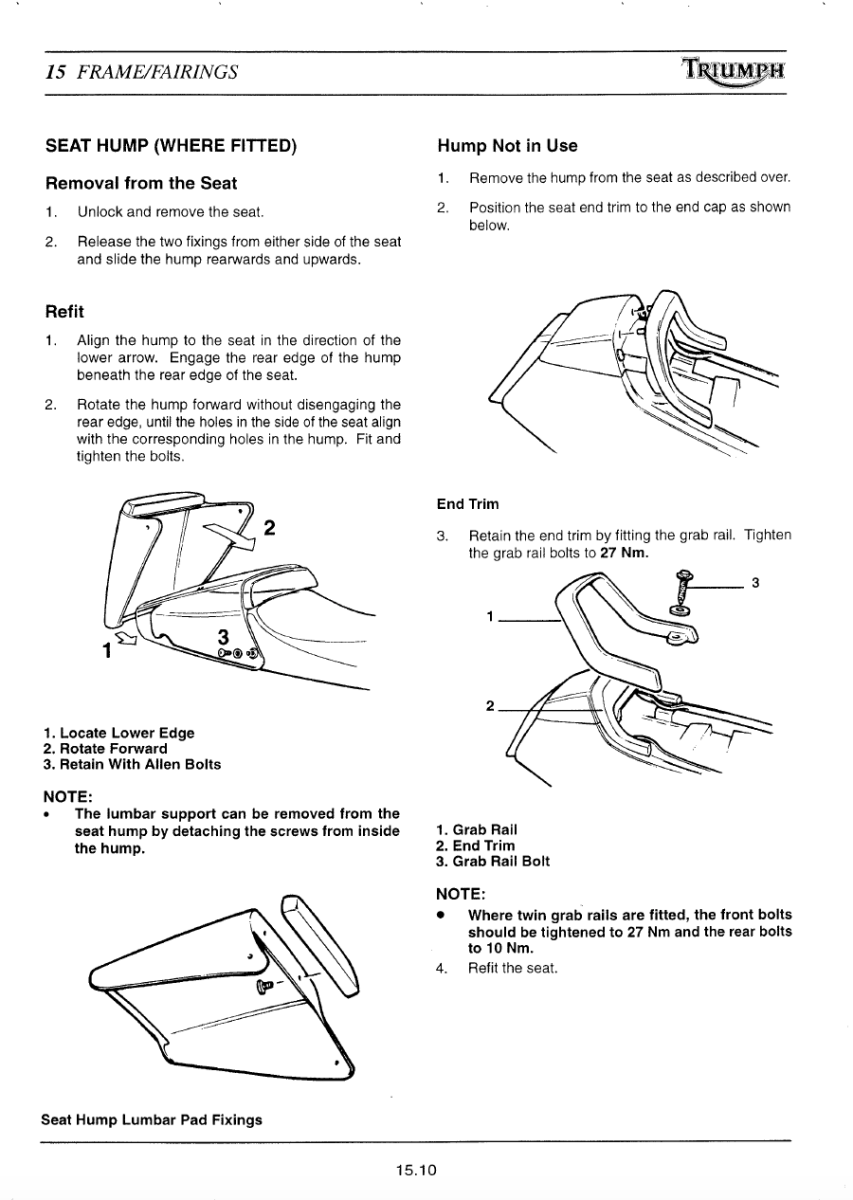
Sample pages and table of contents can be seen in the third product picture, please make sure you are happy with the quality of the manuals before purchasing.
Features Chapters: Introduction, General Information, Servicing, Cylinder Head, Clutch, Balancers, Crankshaft/Rods/Pistons, Transmission, Lubrication, Fuel System/Exhaust, Cooling System, Rear Suspension/Final Drive, Front Suspension/Steering, Brakes, Wheels/Tyres, Frame/Fairings, Electrical System/Ignition, Appendix
If you have any issues downloading/accessing your manual, please contact us so we can fix this for you.
Share




Trident 900 (1991-1998): "About as Straightforward a Bike as You Could Buy" — And One of the Best Early Modern Triumphs
MCN's own review captures the Trident's genuine, unpretentious appeal directly: "reborn Triumph's 900 Trident was about as straightforward a bi[ke]" as the marque offered in its post-1990 revival, and this range was one of the first genuine proof points that the reborn Hinckley factory could build something both characterful and reliable. WhiteDogBikes' own dedicated buyer's guide confirms the model's lasting reputation: "the Trident 900 is considered to be one of the best of the early 1990's Triumphs," built on the same fundamental 885cc triple architecture that also powered the related Trophy, Tiger, Daytona, and Adventurer of the same era.
Power comes from an 885cc liquid-cooled DOHC inline-three, a 76mm x 65mm bore and stroke, and a 10.6:1 compression ratio, fed by three Mikuni carburetors through a 6-speed manual gearbox with chain final drive, delivering a claimed 90-100 hp at 9,000-9,200 rpm and roughly 59-61 lb-ft of torque at 6,500-8,600 rpm. CycleChaos' own detailed technical account is candid about a genuine character quirk in the powerband: "the engine packs some serious punch at lower and higher revs, but somehow lacks power in the mid-range rpms" — a distinctive delivery some owners came to appreciate as part of the triple's charm rather than a flaw. WhiteDogBikes' own buyer's guide confirms a genuine sibling relationship worth knowing: "it was available as pretty much the same bike but with a 750cc engine, the 900cc proved a better bike" — the smaller-displacement Trident 750 sharing nearly identical running gear but generally regarded as the lesser of the two by both period reviewers and today's buyers.
MCN's own collected owner reviews are consistently glowing about long-term ownership, with one owner calling the bike simply "phenomenal," and multiple owners specifically praising the engine's character: "lovely 3 cylinder engine which sounds fantastic as well. So much character. Classic status now, and should not suffer from depreciation." That same collected feedback flags genuine, consistent weak points worth checking on any used example: brakes described as "a little wooden" by modern standards (several owners note braided lines meaningfully improve feel), and a top-heavy feel with a full 25-litre tank. WhiteDogBikes' own maintenance notes confirm the specific age-related issues worth inspecting on this generation: "pitted forks and rotten exhausts if they haven't been garaged," along with "worn sprag clutches (if they didn't have the Triumph warranty recall to correct this) and the coils can be problematic" — genuinely useful pre-purchase inspection points for a bike now well over three decades old. The chassis uses a tubular high-tensile steel frame with 43mm telescopic forks and a gas-pressurized tri-link adjustable rear monoshock, with a large round headlight housing the instrument cluster on top, a one-piece dual seat with passenger grab rail, dual exhaust mufflers, and three double-spoke aluminum wheels carrying through this entire seven-year production span with only detail refinements rather than significant redesign. Dry weight sits around 467 lbs, with a genuine top speed near 134 mph, before the Trident was succeeded by the fully-faired Sprint ST in 1998.
This factory service manual covers the procedures, torque specs, and diagrams needed to keep a 1991-1998 Trident 900 running the way it was built to.
-
Manual Sourcing
We strive to use freely available sources. Some manuals may be scans or photocopies of older originals. Sample previews are shown on the product page, please review them before purchase to ensure quality meets your needs.
-
Copyright
This material is shared in accordance with the GNU General Public License (GPL), GNU Lesser General Public License (LGPL), or designated as Freeware, all of which allow free and open distribution. Additional information is available on our Copyright & Content Disclaimer Page
-
Refunds
Due to the nature of digital products, all sales are final. We recommend reviewing the sample preview on the product page to ensure the manual meets your expectations before purchase. Refunds will not be issued for issues related to content quality already disclosed or shown in the preview.
