


Dr. E Manuals
Triumph Tiger 900 1993-1998 Service Manual
Triumph Tiger 900 1993-1998 Service Manual
Couldn't load pickup availability
Triumph Tiger 900 1993 - 1998 885cc Service / Repair / Workshop Manual
Instant download after purchase, in PDF form, NOT a physical book.
This manual contains 388 pages in English Language, it is the only manual you will require to maintain, repair and service your Triumph Tiger, using this manual you ensure that your motorbike is repaired to manufacturer standards / specification, whether you are using OEM or genuine Triumph Parts.
Suits Models from 1993, 1994, 1995, 1996, 1997 and 1998.
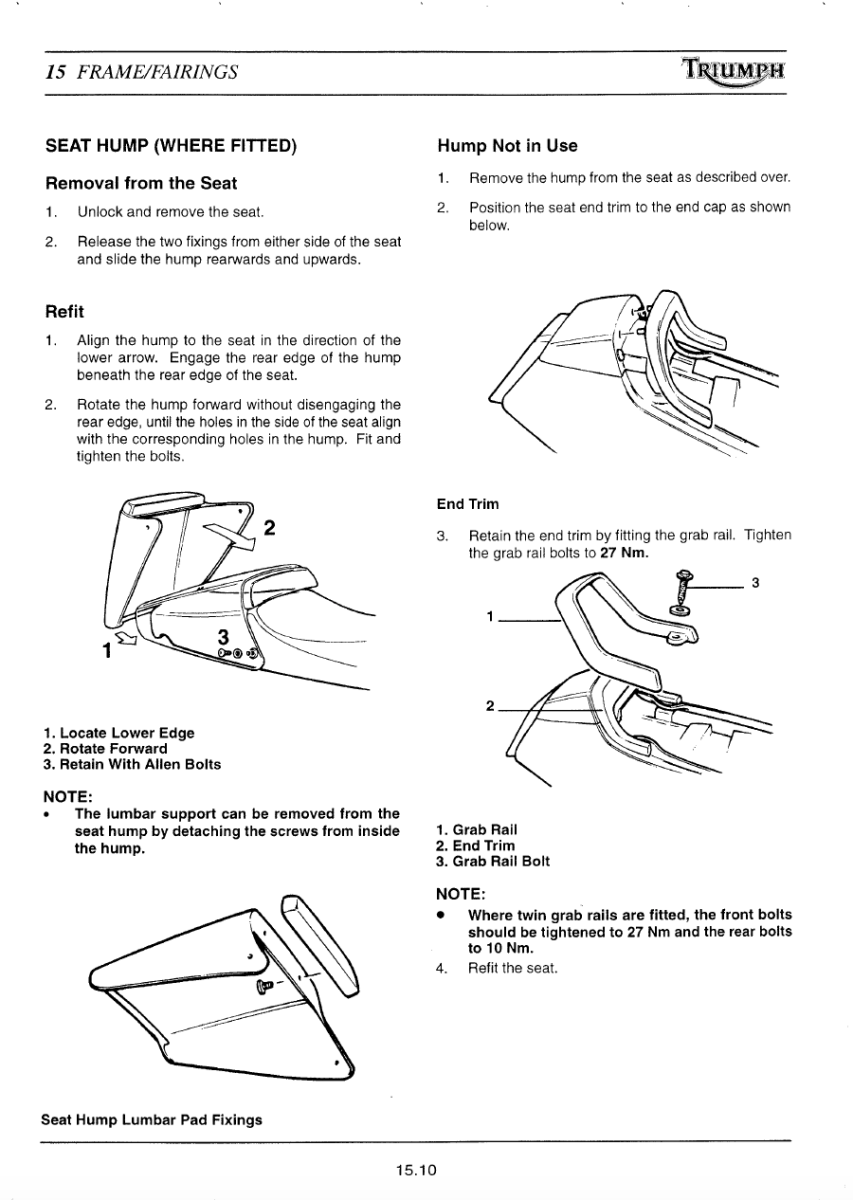
Sample pages and table of contents can be seen in the third product picture, please make sure you are happy with the quality of the manuals before purchasing.
Features Chapters: Introduction, General Information, Servicing, Cylinder Head, Clutch, Balancers, Crankshaft/Rods/Pistons, Transmission, Lubrication, Fuel System/Exhaust, Cooling System, Rear Suspension/Final Drive, Front Suspension/Steering, Brakes, Wheels/Tyres, Frame/Fairings, Electrical System/Ignition, Appendix
If you have any issues downloading/accessing your manual, please contact us so we can fix this for you.
Share




Tiger 900/T400 "Steamer" (1993-1998): The Bold Departure Triumph "Pretty Much Nailed"
Bennetts' own retrospective doesn't undersell how genuinely unusual this bike was for a company still climbing back from financial hardship: "since the British firm's rebirth, a slow climb from its financial woes had been made possible by using as many shared parts as possible across the range. The Triumph Tiger 900 represented a brave departure from this strategy, and they pretty much nailed it. Released to compete with the BMW GS, Honda Africa Twin and Yamaha Super Tenere in the rapidly developing adventure bike market, the Triumph had its work cut out but it more than held its own." Motorcycle Classics' own retrospective confirms the genuine cultural gap this bike was riding ahead of: "it took quite a while for us on the left side of the pond to catch on to adventure bikes: it's fair to say that the U.S. motorcycle market was about cruisers, dirt bikes and street standards until the late 1990s."
Power comes from an 885cc liquid-cooled DOHC 12-valve triple, a 76mm x 65mm bore and stroke, and a 10.6:1 compression ratio, fed by three 36mm flat-slide Keihin CV carburetors with digital ignition, delivering a claimed 82-85 hp at 8,000 rpm and roughly 60-61 lb-ft of torque at 6,000 rpm through a 6-speed gearbox with straight-cut gear primary drive and chain final drive. Motorcycle Classics' own technical account confirms a genuinely deliberate tuning choice behind these numbers: "compared with the 97 horsepower engine used in most of the new Triumphs, the Tiger made fewer horses at 84, but similar torque of 61 lb-ft @ 6,000rpm. Significantly, torque at 3,000rpm was higher by 25%" — a real trade-off Triumph's engineers made specifically to give the Tiger genuine low-end pulling power for off-road and loaded-touring use over outright top-end excitement. Wikipedia's own account confirms the nickname "Steamer" carried real meaning to enthusiasts, identifying it "as a Hinckley Tiger, not a Meriden Tiger, and also distinguishing it as a carburettor, not fuel injected engine."
Motorcycle Classics' own detailed spec sheet confirms the chassis "hung from the same beefy spine frame as the other new Triumphs, with a non-adjustable Kayaba front fork giving 9 inches of travel," paired with a single Kayaba spring/shock offering 8 inches of travel and full preload, compression, and rebound adjustment. Bennetts' own testing flagged a genuine, well-known handling quirk worth knowing on any used example: "the Triumph Tiger's one weak spot was its brakes. Not the twin-piston items themselves but the colossal fork dive that accompanied every squeeze of the lever... it was hard on pads, too." Genuine running changes across this span are confirmed by Bennetts' own year-by-year account: "in 1995, Triumph painted the swingarm black and then added fuel injection in a further update," while autoevolution's own coverage confirms 1998, the model's final year, brought fresh colorways (Lime Green, Dark Blue, Yellow) with a new vinyl tank stripe alongside a genuine engine remap delivering more power and torque before the platform was replaced entirely in 1999 by the fuel-injected T709, built around a retuned version of the T509 Speed Triple's engine. Owner reviews collected by MCN are candid about the bike's substantial mass: one owner noted "trying to move the bike was like attempting to move a small house," while another flagged sprag clutch wear and replacement-parts availability as genuine ownership considerations. Dry weight sits around 455-461 lbs, with a 25-litre fuel tank and 33-inch seat height.
This factory service manual covers the procedures, torque specs, and diagrams needed to keep a 1993-1998 Tiger 900 (T400) running the way it was built to.
-
Manual Sourcing
We strive to use freely available sources. Some manuals may be scans or photocopies of older originals. Sample previews are shown on the product page, please review them before purchase to ensure quality meets your needs.
-
Copyright
This material is shared in accordance with the GNU General Public License (GPL), GNU Lesser General Public License (LGPL), or designated as Freeware, all of which allow free and open distribution. Additional information is available on our Copyright & Content Disclaimer Page
-
Refunds
Due to the nature of digital products, all sales are final. We recommend reviewing the sample preview on the product page to ensure the manual meets your expectations before purchase. Refunds will not be issued for issues related to content quality already disclosed or shown in the preview.
