


Dr. E Manuals
Triumph Daytona T100R 500cc 1963-1974 Service Manual
Triumph Daytona T100R 500cc 1963-1974 Service Manual
Couldn't load pickup availability
Triumph Daytona T100R 500cc 1963 - 1974 Service / Repair / Workshop Manual
Instant download after purchase, in PDF form, NOT a physical book.
This manual contains 258 pages in English Language, it is the only manual you will require to maintain, repair and service your Triumph Daytona T100R, using this manual you ensure that your motorbike is repaired to manufacturer standards / specification, whether you are using OEM or genuine Triumph Parts.
Suits Models from 1963, 1964, 1965, 1966, 1967, 1968, 1969, 1970, 1971, 1972, 1973 and 1974.
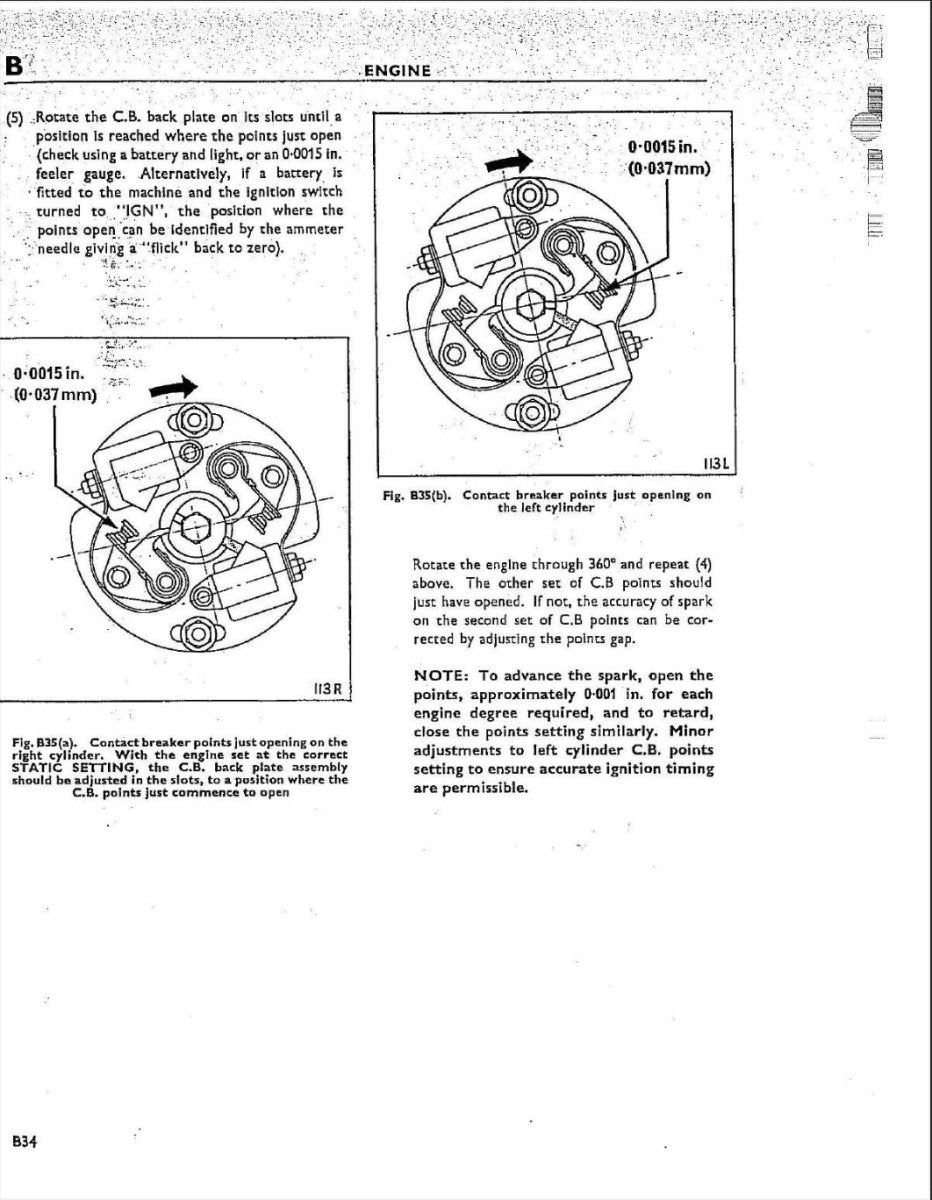
Sample pages and table of contents can be seen in the third product picture, please make sure you are happy with the quality of the manuals before purchasing.
Features Chapters: General Data, Lubrication System, Engine, Transmission, Gearbox, Frame & Attachment Details, Wheels/Brakes & Tyres, Telescopic Fork, Electrical System, Service Tools.
If you have any issues downloading/accessing your manual, please contact us so we can fix this for you.
Share




T100R Daytona: "Baby Bonnie" — Named for Back-to-Back Wins at America's Most Prestigious Race
Motorcycle Classics' own retrospective explains exactly why Triumph chose this name: "when Triumph racked up three wins in the 1960s with their 500cc Tiger twin (Don Burnett in '62, Elmore '66 and Nixon '67), it was only a matter of time before the company capitalized on its successes." Buddy Elmore's legendary 1966 Daytona 200 victory is the stuff of genuine racing folklore — starting from 46th place after last-minute fixes, he fought through the entire field by lap 22 and held the lead to the finish, setting a record speed of 96.58 mph on a racer that "looked surprisingly close to the street 500" underneath its dual Amal GP carburetors and racing exhaust.
Power comes from a 490cc air-cooled OHV parallel-twin, 2 valves per cylinder, a 69mm x 65.5mm bore and stroke, delivering a claimed 39-41 hp at 7,200-7,400 rpm through a 4-speed gearbox with chain final drive. Motorcycle Classics' own technical breakdown confirms the genuine performance upgrades Triumph baked into the road-going Daytona from its 1967 launch, borrowed directly from the racing program: "a new cylinder head featuring shallower valve angles, splayed intake ports to make room for twin Amal Monobloc carburetors, 9:1 compression, and Bonneville cams with larger followers" — genuine race-derived hardware in a street-legal package. That same source notes the Daytona's genuine weight advantage over its bigger 650cc Bonneville sibling: 356 lbs dry versus the Bonnie's 387 lbs, giving the smaller twin a real power-to-weight edge despite its more modest peak output.
A genuine mid-life reliability upgrade arrived in 1969: St. Louis Car Museum's own listing of a well-preserved example confirms the Daytona "were enhanced in 1969 with ball bearing and roller bearing equipment in the bottom end to replace traditional bushings in the valve train to remedy unnecessary wear and oil consumption over time." 1968 brought a genuinely important braking upgrade addressing the bike's biggest early shortcoming — Motorcycle Classics' own account confirms "the Daytona got the new BSA group 8-inch twin-leading-shoe drum front brake," with the model running a drum brake for its entire production life except for "a handful of final production machines in February 1974" that received a disc. By 1973, further performance refinement arrived in the form of E3134 racing cams for both intake and exhaust, strengthened cam followers, valve guides, and performance connecting rods. Genuinely important for anyone servicing one today: Motorcycle Classics' own history notes the T100 range was spared the notorious 1971 Triumph oil-in-frame redesign that plagued other models of the era, "continuing with the lug-and-braze frame and separate oil tank" throughout its run — though that same source is candid that by 1974, "the same motorcycle was condemned by Cycle... as a sluggish vibrator" compared against increasingly sophisticated Japanese rivals, closing out the Daytona's production the same year. Standard equipment included a hydraulic telescopic front fork, twin rear coil-over shocks, wire-spoke wheels, and internal-expanding drum brakes on 19-inch front and 18-inch rear wheels.
-
Manual Sourcing
We strive to use freely available sources. Some manuals may be scans or photocopies of older originals. Sample previews are shown on the product page, please review them before purchase to ensure quality meets your needs.
-
Copyright
This material is shared in accordance with the GNU General Public License (GPL), GNU Lesser General Public License (LGPL), or designated as Freeware, all of which allow free and open distribution. Additional information is available on our Copyright & Content Disclaimer Page
-
Refunds
Due to the nature of digital products, all sales are final. We recommend reviewing the sample preview on the product page to ensure the manual meets your expectations before purchase. Refunds will not be issued for issues related to content quality already disclosed or shown in the preview.
