


Dr. E Manuals
Triumph Daytona 900 1993-1996 Service Manual
Triumph Daytona 900 1993-1996 Service Manual
Couldn't load pickup availability
Triumph Daytona 900 1993 - 1996 885cc Service / Repair / Workshop Manual
Instant download after purchase, in PDF form, NOT a physical book.
This manual contains 388 pages in English Language, it is the only manual you will require to maintain, repair and service your Triumph Daytona, using this manual you ensure that your motorbike is repaired to manufacturer standards / specification, whether you are using OEM or genuine Triumph Parts.
Suits Models from 2016, 2017, 2018, 2019 and 2020.
Sample pages and table of contents can be seen in the third product picture, please make sure you are happy with the quality of the manuals before purchasing.
Features Chapters: Introduction, General Information, Servicing, Cylinder Head, Clutch, Balancers, Crankshaft/Rods/Pistons, Transmission, Lubrication, Fuel System/Exhaust, Cooling System, Rear Suspension/Final Drive, Front Suspension/Steering, Brakes, Wheels/Tyres, Frame/Fairings, Electrical System/Ignition, Appendix
If you have any issues downloading/accessing your manual, please contact us so we can fix this for you.
Share




Daytona 900/Super III (1993-1996): "You Can't Get the Original Cylinder Head Anywhere" — A Genuinely Rare Limited Edition Hiding Inside a Standard Sportbike
A longtime owner's own retrospective on PistonHeads captures the genuine appeal of the range-topping Super III variant honestly, warts and all: "I owned one a few years back; one of only two bikes I ever regret selling... they are not a British Fireblade or ZX9 and a modern 600 will piss all over it without even trying. They are, however, freight-train stable in a straight line, go okay on long sweepers and sound awesome; they're also pretty comfy and economical for everyday use. They are very exclusive (possibly only 1000 ever built?) but you can't get the original cylinder head or body panels anywhere so a rebuild means standard Daytona bits instead." That same owner confirms exactly what set this limited-edition variant apart: "a different cylinder head to the standard 900 Daytona (manufactured for Triumph by Cosworth I believe), various carbon fibre additions (end cans, front mudguard and fairing inners), different body panels and six piston front calipers."
Power on the standard 900 comes from an 885cc liquid-cooled DOHC triple fed by three 36mm flat-slide carburetors with a 10.6:1 compression ratio, delivering a claimed 98 hp at 9,000 rpm through a 6-speed transmission — Motorcycle.com's own contemporary review noted the triple "breathes through a trio of 36mm flatslide carburetors" and is "redlined at 9700 rpm." The Super III took the same fundamental 885cc block and, per that PistonHeads owner, delivered genuinely more top-end punch through the Cosworth-developed head — a Triumph Rat forum member who owned both back-to-back confirms the real-world character difference: "the regular Daytona actually pulls a bit harder from low rpm, but once past 5k rpm the Super III takes over. And keeps going, all the way to redline (which... is conservatively rated as 1,000 rpm higher, even if the gauges don't show it)." That same forum post is candid about the trade-off: "compared to other big sport bikes of the day these things are down on power, relatively slow, and a bit heavy with that steel frame. But DAMN they're beautiful!"
Motorcycle.com's own period review found the standard Daytona 900 a genuinely solid, if unglamorous, proposition against Japanese rivals: "the Triumph Daytona 900's classic looks and style trade on the old Daytona name to create a challenging and loveable sports retro. If you can deal with the weight and the lack of space age gadgetry, it's a solid machine. Perhaps most importantly, five years of European experience with the new Triumphs show that they are built for reliability and hold their value extremely well." Real owner testimony backs this up genuinely: a Review Centre owner who put nearly 70,000km on a '94 model from new called it "an excellent machine for sports touring, being solid, reliable, adaptable... used the bike to almost 70,000km, with no indications of any wear or limit to the motor," while noting the twin-spar aluminum frame delivered handling that "was not the absolute best, it was solid and predictable," and that the bike could be "hard on some rear tyre types" and needed careful oil-level monitoring. RareSportBikesForSale's own detailed listing notes the Super III's carbon components are genuinely "more decorative than alleviating" on a bike still weighing roughly 260kg, and that the T300-generation Triumph triples are "somewhat difficult to handle when you are vertically challenged" given the reach to the clip-on bars.
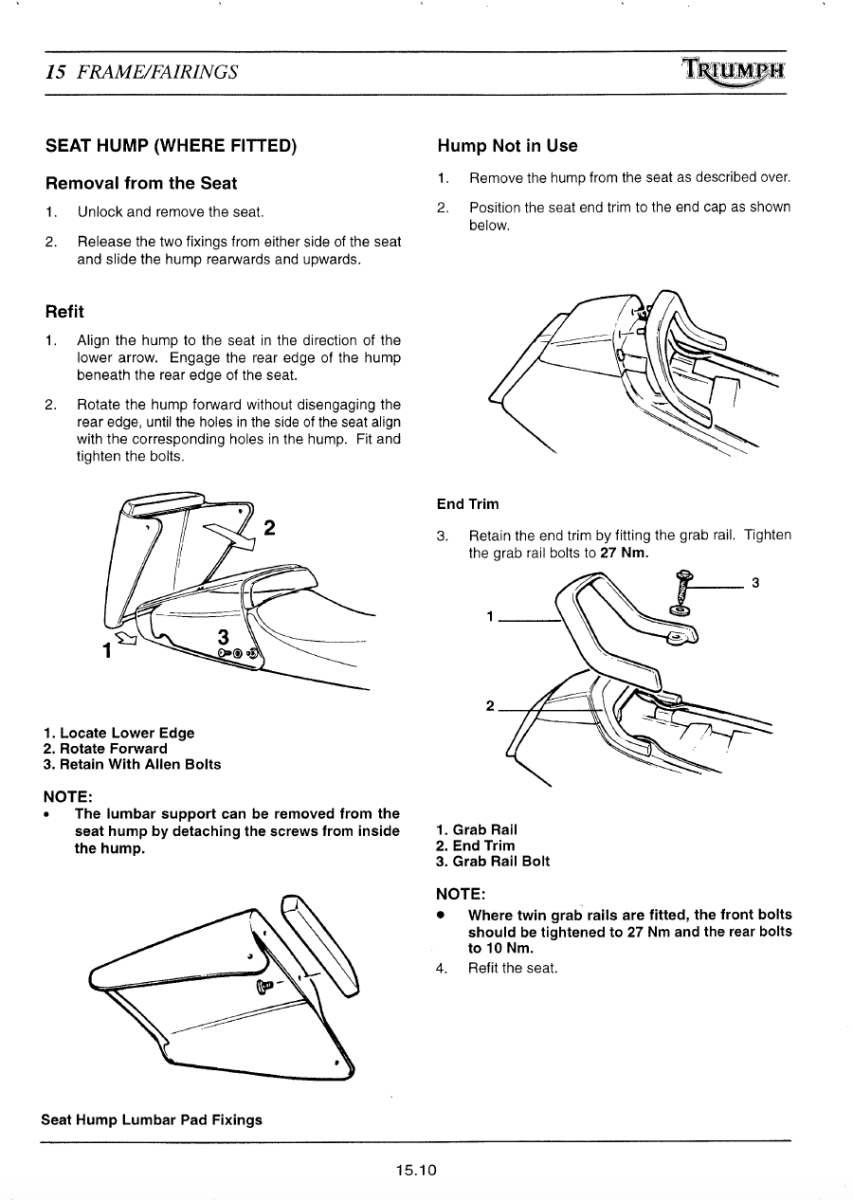
This factory service manual covers the procedures, torque specs, and diagrams needed to keep a 1993-1996 Daytona 900/Super III running the way it was built to.
-
Manual Sourcing
We strive to use freely available sources. Some manuals may be scans or photocopies of older originals. Sample previews are shown on the product page, please review them before purchase to ensure quality meets your needs.
-
Copyright
This material is shared in accordance with the GNU General Public License (GPL), GNU Lesser General Public License (LGPL), or designated as Freeware, all of which allow free and open distribution. Additional information is available on our Copyright & Content Disclaimer Page
-
Refunds
Due to the nature of digital products, all sales are final. We recommend reviewing the sample preview on the product page to ensure the manual meets your expectations before purchase. Refunds will not be issued for issues related to content quality already disclosed or shown in the preview.
