


Dr. E Manuals
Triumph Daytona 900 1200 1993-1997 Service Manual
Triumph Daytona 900 1200 1993-1997 Service Manual
Couldn't load pickup availability
Triumph Daytona 900 1200 1993 - 1997 885cc Service / Repair / Workshop Manual
Instant download after purchase, in PDF form, NOT a physical book.
This manual contains 388 pages in English Language, it is the only manual you will require to maintain, repair and service your Triumph Daytona, using this manual you ensure that your motorbike is repaired to manufacturer standards / specification, whether you are using OEM or genuine Triumph Parts.
Suits Models from 1993, 1994, 1995, 1996 and 1997.
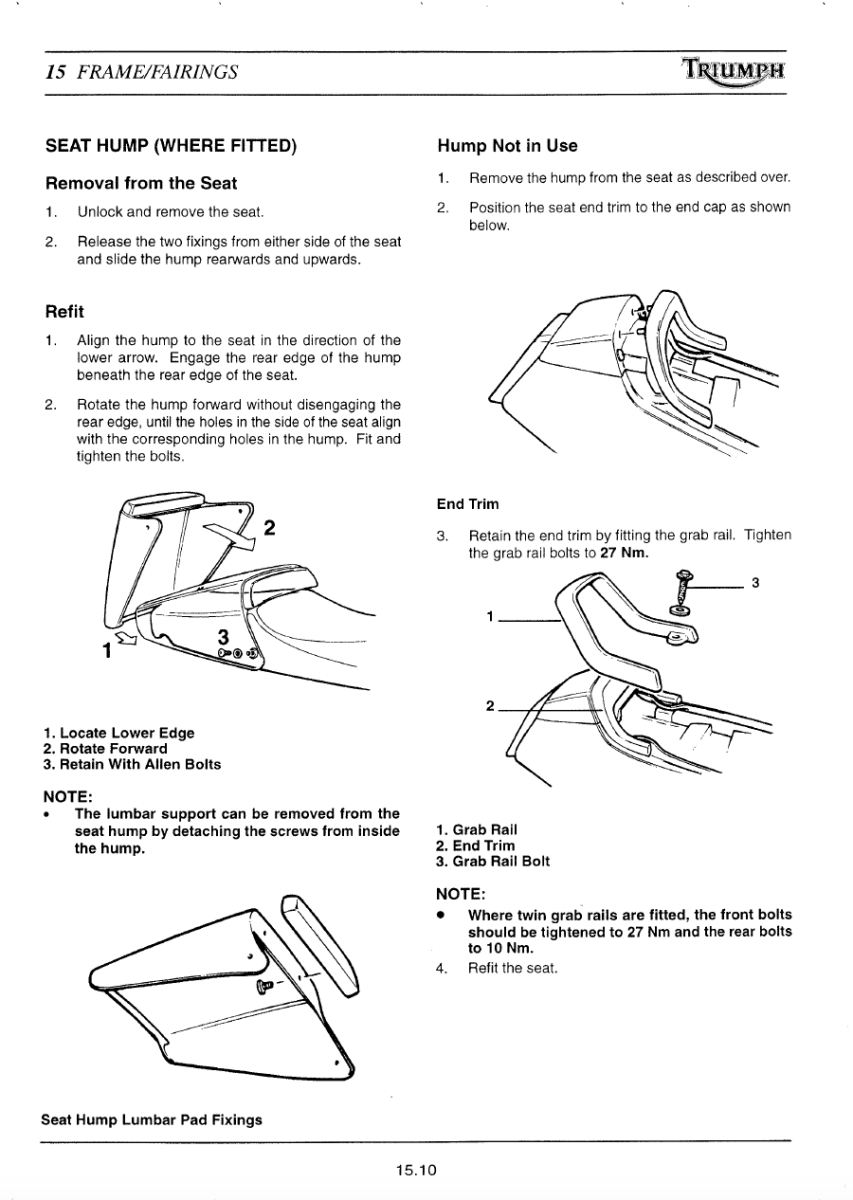
Sample pages and table of contents can be seen in the third product picture, please make sure you are happy with the quality of the manuals before purchasing.
Features Chapters: Introduction, General Information, Servicing, Cylinder Head, Clutch, Balancers, Crankshaft/Rods/Pistons, Transmission, Lubrication, Fuel System/Exhaust, Cooling System, Rear Suspension/Final Drive, Front Suspension/Steering, Brakes, Wheels/Tyres, Frame/Fairings, Electrical System/Ignition, Appendix
If you have any issues downloading/accessing your manual, please contact us so we can fix this for you.
Share




Daytona 900/1200 (1993-1996): Cosworth-Tuned Triple Meets Britain's Biggest Sportbike Four
MotoFomo's own detailed model history frames the genuine engineering story behind the 1993 replacement of the earlier short-stroke engines: "Triumph replaced both short-stroke engines for 1993. The Daytona 900 used the 885cc long-stroke triple and made a claimed 72kW (98 hp) and 83 Nm (61 lb-ft). That output looks modest now, but the stronger midrange made the 900 easier to ride quickly than the 750." Crucially, that same account confirms genuine motorsport pedigree behind this engine: "Triumph worked with Cosworth on the 885cc engine, raising compression and revising the cams and ignition" — the same fundamental triple that would go on to power Triumph's contemporary Trident, Trophy, and eventually the original Speed Triple.
Power on the 900 Super III comes from an 885cc liquid-cooled DOHC triple, a 76mm x 65mm bore and stroke, and a 10.6:1 compression ratio, fed by three carburetors, delivering a claimed 98-114 hp at 9,000-9,500 rpm and roughly 61-64 lb-ft of torque at 6,500 rpm through a 6-speed gearbox — figures vary slightly across period sources depending on exact tune and testing method, but consistently confirm a genuinely torque-rich, midrange-focused character rather than a peaky race-bike delivery. The Daytona 1200, sold alongside the 900 in Triumph's genuinely broad early-'90s Daytona range, stepped up to a 1,180cc liquid-cooled inline-four fed by four carburetors, delivering a claimed 147 hp at 9,400 rpm and 85 lb-ft of torque at 8,000 rpm — MotoFomo's own account confirms it "was tall and heavy, with a 25-litre tank, and it could reach roughly 270 km/h (168 mph) in favourable conditions," making it genuinely one of the fastest production motorcycles Britain built at the time.
Both engines share Triumph's signature modular design philosophy from this Hinckley-built era — the same fundamental block architecture scaled between three and four cylinders, strapped into a common high-tensile tubular steel frame with 43mm telescopic forks and a gas-pressurized rear monoshock. Autoevolution's own year-by-year coverage confirms both models stayed genuinely stable throughout this span, with the 1996 900 Super III "packing the same performance, technical, and visual specifications as previous models, without any modifications whatsoever" — a deliberate continuity rather than annual redesign. Styling across both displacement classes shared a twin round headlight fairing, a one-piece dual seat with passenger grab rail, dual mufflers (one per side), and lightweight three-spoke aluminum wheels. Wikipedia's own production record confirms neither model was built in 1997, the year Triumph replaced the entire Daytona lineup with the fuel-injected, 955cc three-cylinder T595 — a genuine platform reinvention that closed out this carbureted, 900/1200-badged Daytona generation entirely.
This factory service manual covers the procedures, torque specs, and diagrams needed to keep a 1993-1996 Daytona 900/1200 running the way it was built to.
-
Manual Sourcing
We strive to use freely available sources. Some manuals may be scans or photocopies of older originals. Sample previews are shown on the product page, please review them before purchase to ensure quality meets your needs.
-
Copyright
This material is shared in accordance with the GNU General Public License (GPL), GNU Lesser General Public License (LGPL), or designated as Freeware, all of which allow free and open distribution. Additional information is available on our Copyright & Content Disclaimer Page
-
Refunds
Due to the nature of digital products, all sales are final. We recommend reviewing the sample preview on the product page to ensure the manual meets your expectations before purchase. Refunds will not be issued for issues related to content quality already disclosed or shown in the preview.
