


Dr. E Manuals
Triumph Adventurer 900 1996-2002 Service Manual
Triumph Adventurer 900 1996-2002 Service Manual
Couldn't load pickup availability
Triumph Adventurer 900 1996 - 2002 885cc Service / Repair / Workshop Manual
Instant download after purchase, in PDF form, NOT a physical book.
This manual contains 388 pages in English Language, it is the only manual you will require to maintain, repair and service your Triumph Adventurer, using this manual you ensure that your motorbike is repaired to manufacturer standards / specification, whether you are using OEM or genuine Triumph Parts.
Suits Models from 1996, 1997, 1998, 1999, 2000, 2001 and 2002.
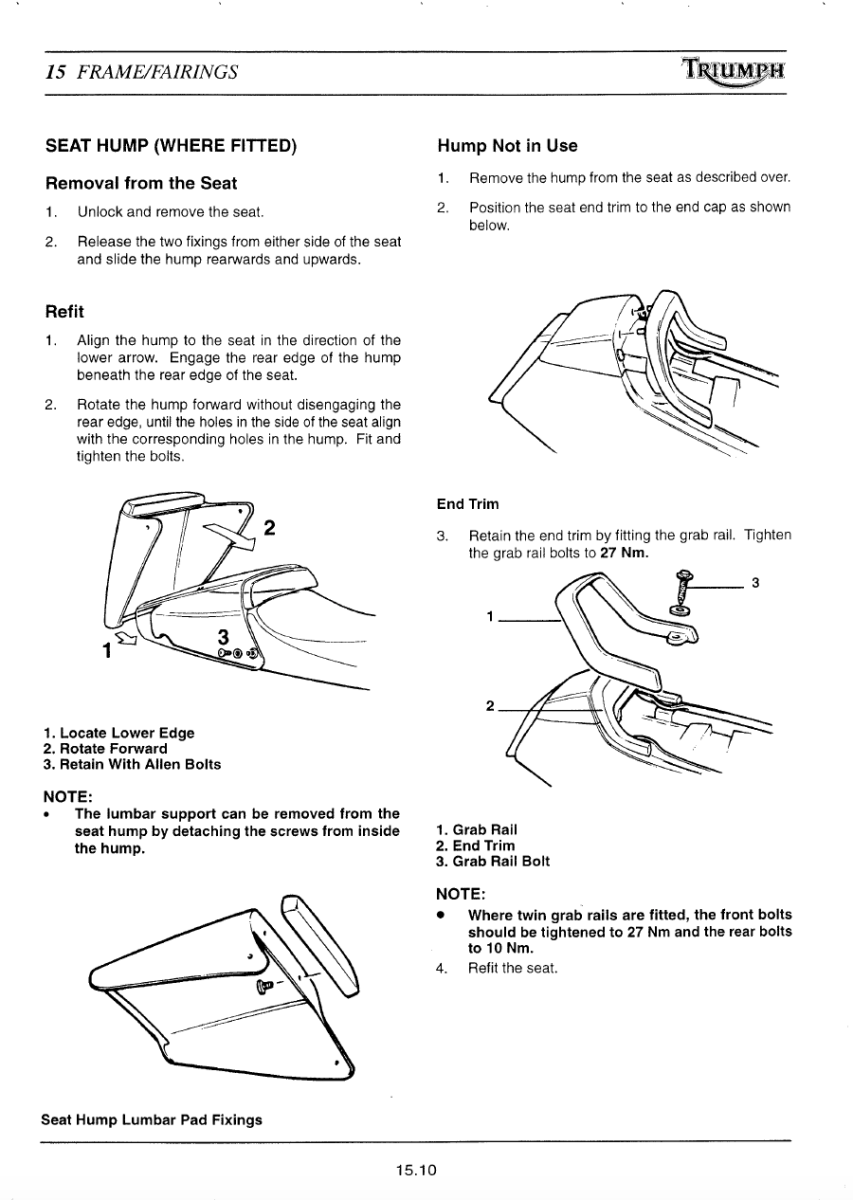
Sample pages and table of contents can be seen in the third product picture, please make sure you are happy with the quality of the manuals before purchasing.
Features Chapters: Introduction, General Information, Servicing, Cylinder Head, Clutch, Balancers, Crankshaft/Rods/Pistons, Transmission, Lubrication, Fuel System/Exhaust, Cooling System, Rear Suspension/Final Drive, Front Suspension/Steering, Brakes, Wheels/Tyres, Frame/Fairings, Electrical System/Ignition, Appendix
If you have any issues downloading/accessing your manual, please contact us so we can fix this for you.
Share




Adventurer 900 (1996-2002): "One of the Best Incarnations of the Original Big Hinckley Triple"
MCN's own review doesn't hedge on the genuine engineering quality hiding under this bike's laid-back cruiser looks: "for our money, along with the T-bird, the engine in the Triumph Adventurer is one of the best incarnations of the original big Hinckley triple. The 885cc motor has been detuned from Trident and Trophy spec to give even more low down oomph." That same review captures the genuine character shift a detuned triple delivers in cruiser form: "wound open the Triumph Adventurer's engine sounds like a squadron of Lancasters and with restyled chromy and curvy engine cases it looks the business too. A classic." Autoevolution's own history confirms the name's genuine heritage: "its name was taken from a 1970s 500cc parallel-twin trail bike," a deliberate historical callback rather than a purely marketing-invented label.
Power comes from an 885cc liquid-cooled transverse three-cylinder engine, 4 valves, a 76.2mm x 76.2mm bore and stroke, fed by three Mikuni carburetors through a 6-speed manual gearbox with chain final drive, delivering a claimed 69 hp at 8,000 rpm and roughly 53 lb-ft of torque at 4,800 rpm — genuinely the same fundamental 885cc block powering Triumph's contemporary Thunderbird 900, Trophy 900, and Tiger 900, here tuned specifically for low-end grunt rather than top-end excitement. Autoevolution's own model history confirms the Adventurer shared far more than just the engine with the Thunderbird: "the Adventurer model shared the steel frame, front forks, rear shock absorber, wheels, and brakes with the Thunderbird 900," differentiated mainly by a raised handlebar, a single-seat option, a larger rear fender, and genuinely extensive chrome-plated engine covers.
CycleChaos' own year-by-year styling breakdown confirms the platform's deliberate lean toward classic American cruiser proportions: "the 1998 MY Triumph Adventurer 900 has a classic cruiser look, with higher bars, longer forks and a 19/16 inch wheel combo, make the Adventurer the most laid back bike in the Triumph family, literally" — a genuinely distinct riding stance from the more upright Thunderbird it shared its chassis with. Braking used dual 320mm front discs with two-piston calipers and a single 285mm rear disc, with a 43mm telescopic fork and preload-adjustable monoshock rear suspension. MCN's own collected owner review from a 1996 model owner offers genuinely reassuring real-world confirmation of the platform's build quality: "from around 1993 onwards, Triumph quality moved on apace — and it certainly shows with the Thunderbird and Adventurer. Paint and chrome is thick, fit and finish is generally good and those early triples are basically over-engineered so are tough as old boots too," with the only reported maintenance issue across ownership being a coil replacement. Autoevolution's own coverage confirms genuine consistency across this run — the model saw essentially no significant changes year to year, with 2000 bringing only a new Jet Black with Lucifer Orange colorway before the platform was discontinued in 2001-2002. Dry weight sits around 485 lbs, with a 4-litre (roughly 1-gallon figure noted in some parts catalogs, though a larger tank was standard on the actual production bike) fuel tank and 29.5-inch seat height, and autoevolution's own account confirms the Adventurer was genuinely "one of the biggest-selling machines in the Triumph range" throughout its production life.
This factory service manual covers the procedures, torque specs, and diagrams needed to keep a 1996-2002 Adventurer 900 running the way it was built to.
-
Manual Sourcing
We strive to use freely available sources. Some manuals may be scans or photocopies of older originals. Sample previews are shown on the product page, please review them before purchase to ensure quality meets your needs.
-
Copyright
This material is shared in accordance with the GNU General Public License (GPL), GNU Lesser General Public License (LGPL), or designated as Freeware, all of which allow free and open distribution. Additional information is available on our Copyright & Content Disclaimer Page
-
Refunds
Due to the nature of digital products, all sales are final. We recommend reviewing the sample preview on the product page to ensure the manual meets your expectations before purchase. Refunds will not be issued for issues related to content quality already disclosed or shown in the preview.
