


Dr. E Manuals
Kawasaki Z1000 Ninja 1000 2017-2019 Service Manual
Kawasaki Z1000 Ninja 1000 2017-2019 Service Manual
Couldn't load pickup availability
2017-2019 Kawasaki Z1000 Ninja 1000 Service / Repair / Workshop Manual
Instant download after purchase, in PDF form, NOT a physical book.
This manual contains 736 pages in English Language, it is the only manual you will require to maintain, repair and service your Kawasaki Z1000 Ninja 1000.
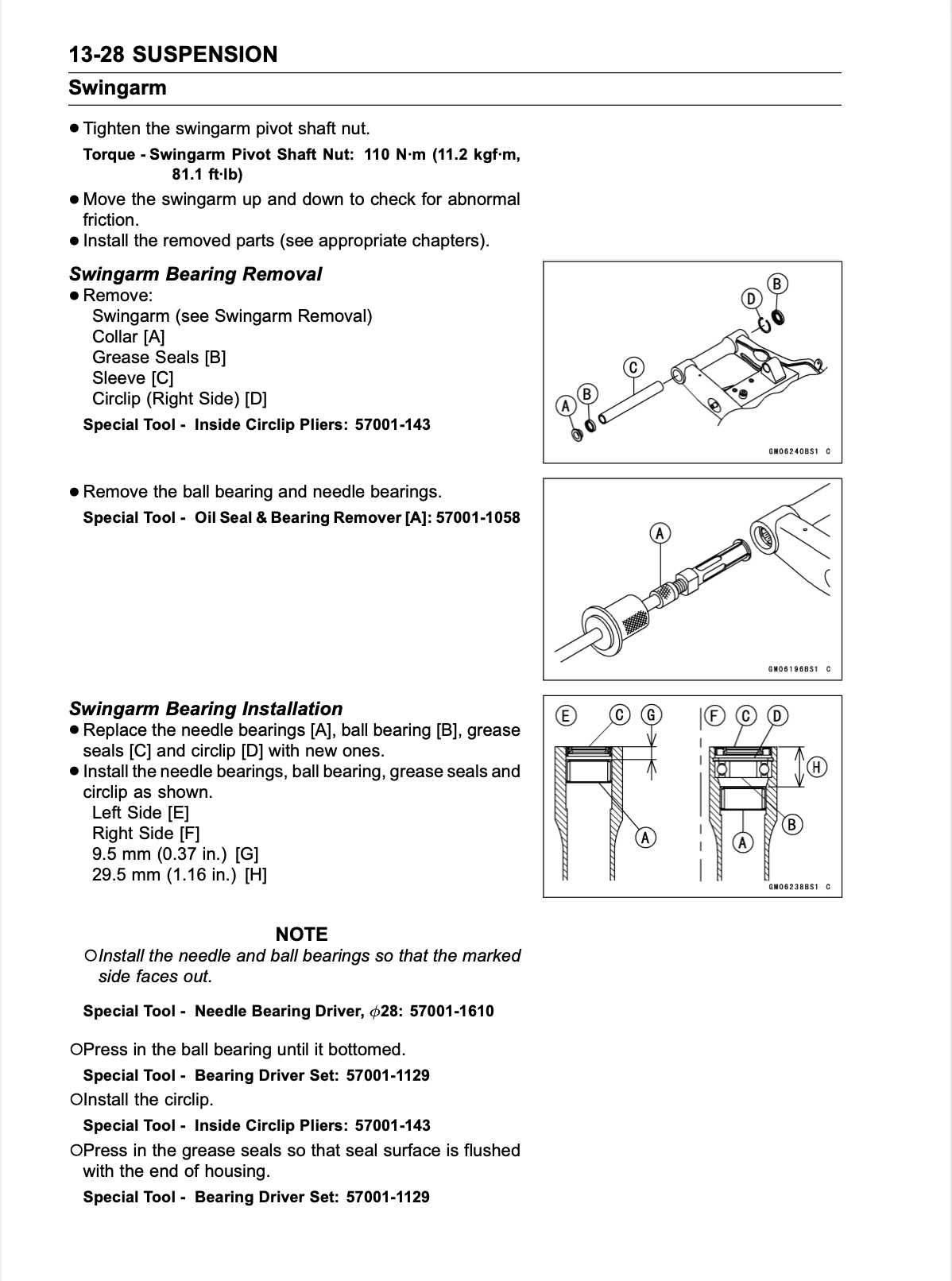
Sample pages and table of contents can be seen in the third product picture, please make sure you are happy with the quality of the manuals before purchasing.
Suits Models from 2017, 2018, 2019
If you have any issues downloading/accessing your manual, please contact us so we can fix this for you.
Share



Z1000/Ninja 1000 (2017-2019): Same Streetfighter Heart, Two Completely Different Riding Positions
MCN's own comparison sums up the family relationship precisely: the Ninja 1000 (badged Z1000SX in Europe) shares its rolling chassis and powertrain directly with the Z1000 naked bike, but wraps it in fairings, adjustable windscreen, thicker seats, and clip-on bars for genuinely different sport-touring intent. For 2017, Kawasaki refreshed both siblings for Euro4 compliance while also introducing a higher-spec Z1000 R alongside the standard naked model.
Power comes from the 1,043cc liquid-cooled inline-four shared across the family, DOHC with 4 valves per cylinder, delivering a claimed 142 hp at 10,000 rpm and roughly 82 lb-ft of torque at 7,300 rpm on the Z1000, with the faired Ninja 1000/Z1000SX running virtually identical output tuned slightly for midrange usability given its sport-touring brief. MCN's review of the 2017 Z1000SX found genuine chassis refinements that year: Kawasaki lowered the rear via a revised shock linkage and modified suspension at both ends, trading a touch of ground clearance and steering quickness for improved ride comfort and rear-end feedback — genuinely noticeable on rough pavement, where the SX's supple suspension "gracefully flowed through the mainly open bends" according to that review.
The Z1000 R, introduced for 2017 as the range-topping naked variant, added a fully adjustable Öhlins S46DR1S rear shock with remote preload adjustment and a revised ECU mapped for a smoother power delivery curve, alongside distinct paintwork — genuine performance upgrades over the standard Z1000, which continued unchanged apart from the Euro4 update. Both the standard Z1000 and R variant went off sale after 2017, while the Ninja 1000/Z1000SX continued through 2019 before Kawasaki's more substantial 2020 redesign, which added electronic cruise control, a TFT display, and rebranded the model globally as the Ninja 1000SX. A twin-tube aluminum frame, 41mm inverted fork, and dual 310mm front discs with radial calipers formed the shared chassis foundation across every variant in this family, with the Ninja/SX carrying a heavier 235kg wet weight versus the naked Z1000's lighter, more stripped-down configuration.
-
Manual Sourcing
We strive to use freely available sources. Some manuals may be scans or photocopies of older originals. Sample previews are shown on the product page, please review them before purchase to ensure quality meets your needs.
-
Copyright
This material is shared in accordance with the GNU General Public License (GPL), GNU Lesser General Public License (LGPL), or designated as Freeware, all of which allow free and open distribution. Additional information is available on our Copyright & Content Disclaimer Page
-
Refunds
Due to the nature of digital products, all sales are final. We recommend reviewing the sample preview on the product page to ensure the manual meets your expectations before purchase. Refunds will not be issued for issues related to content quality already disclosed or shown in the preview.
