


Dr. E Manuals
Kawasaki Ninja 650 + ABS 2017-2023 Service Manual
Kawasaki Ninja 650 + ABS 2017-2023 Service Manual
Couldn't load pickup availability
Kawasaki Ninja 650 + ABS 2017 - 2023 Service / Repair / Workshop Manual
Instant download after purchase, in PDF form, NOT a physical book.
This manual contains 718 pages in English Language, it is the only manual you will require to maintain, repair and service your Kawasaki Ninja, using this manual you ensure that your motorbike is repaired to manufacturer standards / specification, whether you are using OEM or genuine Kawasaki Parts.
Suits Models from 2017, 2018, 2019, 2020, 2021, 2022 and 2023.
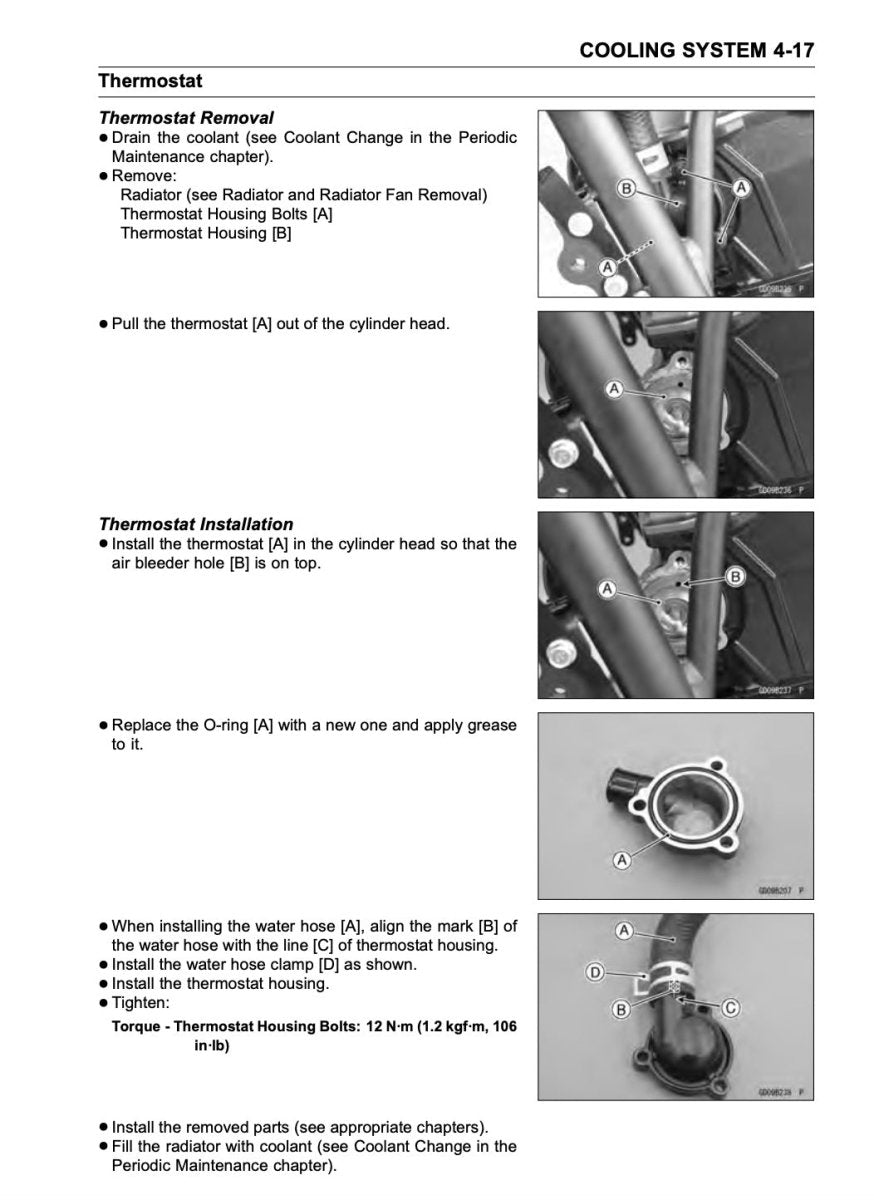
Sample pages and table of contents can be seen in the third product picture, please make sure you are happy with the quality of the manuals before purchasing.
Features Chapters: General Information, Periodic Maintenance, Fuel System (DFI), Cooling System, Engine Top End, Clutch, Engine Lubrication System, Engine Removal/Installation, Crankshaft/Transmission, Wheels/Tires, Final Drive, Brakes, Suspension, Steering, Frame, Electrical System, Appendix.
If you have any issues downloading/accessing your manual, please contact us so we can fix this for you.
Share




Ninja 650 (2017-2023): "Friendlier Than Ever," Sharing Its Genes With the New Z650
Ultimate Motorcycling's own review captures the genuine scale of this redesign in one word: "everything is new" — Motorcycle Mojo's own testing confirms the only real carryover from the outgoing Ninja 650R/ER-6f was the name and the fundamental engine, "though even it has seen a major revision." Cycle World's own coverage confirms this platform shares its core chassis and engine updates directly with the naked Z650 launched the same year, both replacing Kawasaki's aging ER-6 lineup with a genuinely modernized middleweight parallel-twin platform.
Power comes from a 649cc liquid-cooled parallel-twin, DOHC with 8 valves, an 83.0mm x 60.0mm bore and stroke, delivering a claimed torque increase to 48.5 lb-ft — Motorcycle Mojo's own technical breakdown confirms the cylinders lost their steel liners for 2017, reducing weight and letting Kawasaki bring the bores closer together for a narrower engine overall, paired with a redesigned cylinder head running milder cam timing and 36mm throttle bodies (down 2mm from the prior generation). Ultimate Motorcycling's own testing found the genuine intent behind these changes: "Kawasaki has focused on bringing out low-end and mid-range power," delivering "an almost docile feel from the Ninja 650 below 5000 rpm, which is great for cruising about town," while still letting more experienced riders exploit the full rev range for a genuine "grin-inducing snarl" through the twisties.
Motorcycle.com's own review highlights the genuine weight-saving effort behind this generation: a claimed 42-lb reduction versus the outgoing model, bringing curb weight to 426 lbs — "interestingly, the 2017 Ninja 650 weighs a claimed 1.8 pounds less than its supersport ZX-6R model," a real testament to how thoroughly Kawasaki's engineers trimmed mass from the fine-atomizing fuel injectors, narrower intake ports, revised camshaft profiles, redesigned airbox, and a shorter exhaust with the crossover tube eliminated entirely. Bennetts' own buying guide traces the genuine feature evolution across this long run: color TFT dash with smartphone connectivity arriving in 2020 (replacing the earlier LCD display, which still retained a gear indicator and fuel gauge), and two-level Kawasaki Traction Control arriving in 2023 — technology first debuted a year earlier on the related Versys 650 — though Bennetts' review notes this addition is "not entirely necessary on a bike with limited power and quite friendly motor characteristics," a genuine safety-net addition rather than a response to any real handling deficiency. Styling drew directly from the larger ZX-6R and ZX-10R sportbikes, with a redesigned swingarm serving both aesthetic and functional purposes. This generation carried the Ninja 650 name (dropping the "R" suffix used on the outgoing ER-6f-based bike) through 2023, with 1000PS's own direct comparison between the 2017 and 2023 models confirming the platform's continuous refinement kept it "an enrichment for the class" throughout, even as the Ninja badge's supersport connotations occasionally overpromised relative to this genuinely friendly, approachable middleweight's actual character.
This factory service manual covers the procedures, torque specs, and diagrams needed to keep a 2017-2023 Ninja 650/Ninja 650 ABS running the way it was built to.
-
Manual Sourcing
We strive to use freely available sources. Some manuals may be scans or photocopies of older originals. Sample previews are shown on the product page, please review them before purchase to ensure quality meets your needs.
-
Copyright
This material is shared in accordance with the GNU General Public License (GPL), GNU Lesser General Public License (LGPL), or designated as Freeware, all of which allow free and open distribution. Additional information is available on our Copyright & Content Disclaimer Page
-
Refunds
Due to the nature of digital products, all sales are final. We recommend reviewing the sample preview on the product page to ensure the manual meets your expectations before purchase. Refunds will not be issued for issues related to content quality already disclosed or shown in the preview.
