


Dr. E Manuals
Kawasaki KX80 1988-1990 Service Manual
Kawasaki KX80 1988-1990 Service Manual
Couldn't load pickup availability
1988-1990 Kawasaki KX80 Service / Repair / Workshop Manual
Instant download after purchase, in PDF form, NOT a physical book.
This manual contains 252 pages in English Language, it is the only manual you will require to maintain, repair and service your Kawasaki KX80.
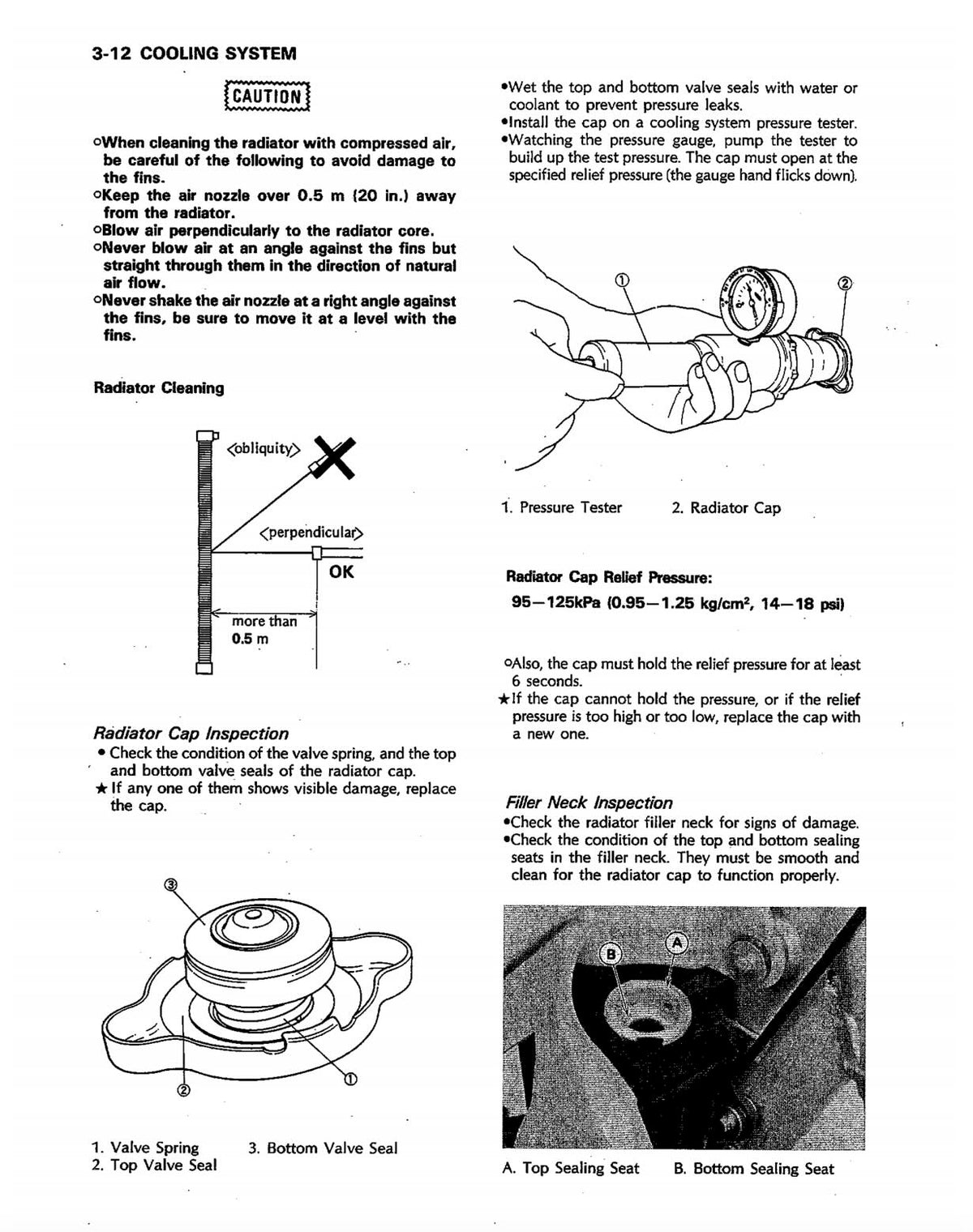
Sample pages and table of contents can be seen in the third product picture, please make sure you are happy with the quality of the manuals before purchasing.
Suits Models from 1988, 1989, 1990
If you have any issues downloading/accessing your manual, please contact us so we can fix this for you.
Share



KX80 (1988-1990): "A Breakthrough" Against the Suzukis and Hondas That Dominated the 80cc Class
Off-Roading Pro's own retrospective doesn't undersell how genuinely underrated this platform's performance was: "Kawasaki's KX80 may not be the first name on the minibike map, but its performance is second to none. And this should be no surprise, especially from a pit bike belonging to the famed KX lineup. Despite the segment being dominated by Suzukis and Hondas, the KX80 still made a breakthrough and even introduced the concept of MX racing to hobbyists and beginners." CycleChaos' own confirmed model-code breakdown flags a genuinely important detail for anyone dating or sourcing parts within this exact three-year span: Kawasaki actually sold two distinct displacement configurations simultaneously in every one of these years — a genuine standard KX80 and a larger "KX80 II" — under separate model codes: 1988 spans KX80-L1/M1/N1/P1, 1989 spans L2/M2/N2/P2, and 1990 spans L3/M3/N3/P3.
Power on the standard model comes from a 79.4cc two-stroke single, delivering a claimed 17.65 kW (24 hp), while the larger KX80 II variant runs an 82.8cc engine delivering the same claimed 24 hp — Off-Roading Pro's own account confirms the genuine mechanical distinction driving this dual-displacement approach: "engine displacement is 82 cm³ (5.0 in³), while the compression ratio is 9.4:1. A 28-mm Keihin carburetor handles the air-fuel mixture. 1990 Kawasaki KX80 models used a Keihin PE26 carb with slightly different jetting (#122 main, #55 slow)" — a genuine running change worth confirming against the exact model year before assuming universal carburetor calibration across the whole range.
Off-Roading Pro's own confirmed real-world figures list a 13-inch ground clearance and 75 mph top speed, with maximum torque in the 14.2-15.7 Nm (10.5-11.6 ft-lb) range at 11,000-11,500 rpm — genuinely high-revving, race-tuned output for a bike this size. CycleChaos' own account confirms the platform's genuine long production run reflected consistent development: entry-level competition motocross architecture that Kawasaki kept refining year over year before eventually upgrading the whole line to the larger 85cc KX85 in 2001.
Because this exact range genuinely spans two simultaneously-sold displacement configurations under closely related model codes, correct frame and engine number identification — the Kawasaki Motorcycle Forums' own confirmed VIN decoding reference explains the model-year letter system directly — remains the most reliable way to confirm which specific engine and carburetor jetting a given bike within this range actually runs.
This factory service manual covers the procedures, torque specs, and diagrams needed to keep a 1988-1990 KX80's two-stroke engine and driveline running the way it was built to.
-
Manual Sourcing
We strive to use freely available sources. Some manuals may be scans or photocopies of older originals. Sample previews are shown on the product page, please review them before purchase to ensure quality meets your needs.
-
Copyright
This material is shared in accordance with the GNU General Public License (GPL), GNU Lesser General Public License (LGPL), or designated as Freeware, all of which allow free and open distribution. Additional information is available on our Copyright & Content Disclaimer Page
-
Refunds
Due to the nature of digital products, all sales are final. We recommend reviewing the sample preview on the product page to ensure the manual meets your expectations before purchase. Refunds will not be issued for issues related to content quality already disclosed or shown in the preview.
