


Dr. E Manuals
Kawasaki KX250 KX 250 1988-2004 Service Manual
Kawasaki KX250 KX 250 1988-2004 Service Manual
Couldn't load pickup availability
Kawasaki KX250 KX 250 1988 - 2004 Service / Repair / Workshop Manual
Instant download after purchase, in PDF form, NOT a physical book.
This manual contains 330 pages in English Language, it is the only manual you will require to maintain and repair your Kawasaki KX250, using this manual you ensure that your motorbike is repaired to manufacturer standards / specification, whether you are using OEM or genuine Kawasaki Parts.
Suits Models from 1988, 1989, 1990, 1991, 1992, 1993, 1994, 1995, 1996, 1997, 1998, 1999, 2000, 2001, 2002, 2003 and 2004.
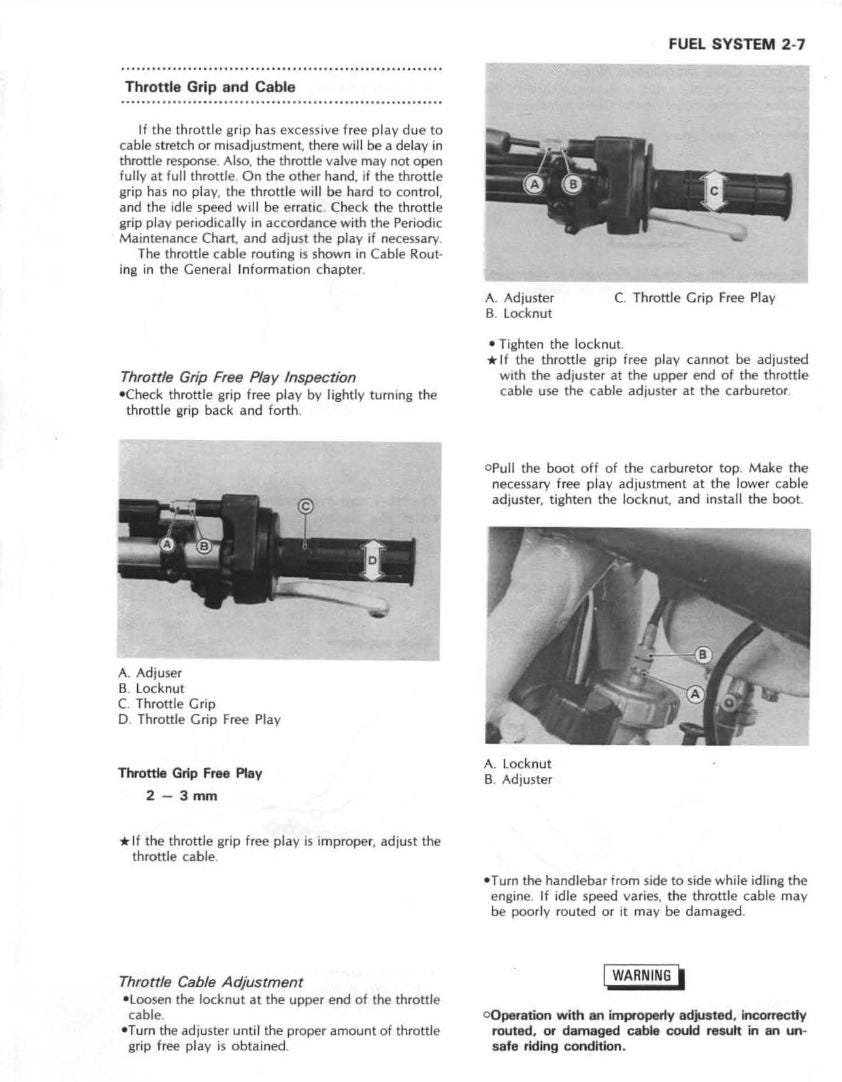
Sample pages and table of contents can be seen in the third product picture, please make sure you are happy with the quality of the manuals before purchasing.
Features Chapters: General Information, Fuel System, Cooling System, Engine Top End, Engine Right Side, Engine Removal/Installation, Engine Bottom End/Transmission, Wheels/Tires, Final Drive, Brakes, Suspension, Steering, Electrical System, Appendix.
If you have any issues downloading/accessing your manual, please contact us so we can fix this for you.
Share



KX250 (1988-2004): "Kawasaki Perfected the Modern Power Valve" — The Genuine Foundation for Two Decades of KIPS Design
PulpMX's own retrospective on the 1988 model year confirms exactly why that specific year genuinely matters to this platform's long history: "for 1988, Kawasaki perfected the modern 'power valve' by adding a third valve to alter the height of the exhaust port as well as vary the volume of the exhaust pipe. By combining the technology used in Honda's ATAC and Yamaha's YPVS, Kawasaki was able to set the foundation for the next two decades of power valve design." That same review confirms genuine suspension refinement arrived alongside the engine work that year — "the only complaint with their operation was a hint of the old fork's harshness in the mid-stroke, but overall, it was rated the second-best front end of 1988 behind only the excellent silverware found on the Suzuki RM250" — though it's candid that the new-for-1988 Uni-Trak rear shock needed a re-valve to genuinely perform: "harsh and prone to packing, the KYB shock needed a re-valve if you hoped to get the most out of your new KX250."
Power comes from a 249cc liquid-cooled single-cylinder two-stroke engine, fed through Kawasaki's evolving KIPS (Kawasaki Integrated Powervalve System), delivering a claimed 58-59 hp at 9,000 rpm and roughly 37-38 lb-ft of torque at 7,000-8,000 rpm through a 5-speed transmission with wet multi-disc manual clutch. CycleChaos' own detailed spec sheet confirms genuine chassis evolution across this platform's long life: a high-tensile perimeter steel frame with an aluminum subframe, a 48mm twin-chamber inverted cartridge-type fork up front, and a Uni-Trak rear swingarm with a single, fully adjustable shock offering separate air and oil chambers — real, sophisticated hardware refined continuously rather than reinvented year to year.
CycleChaos' own account confirms the genuine deep racing pedigree this platform carries: "the first KX250 was based largely on Jimmy Weinert's 1973 machine," and Kawasaki's philosophy of "continuous development for their KX series" is exactly why factory racing improvements consistently trickled down into production machines throughout this 1988-2004 span rather than arriving in occasional, disruptive redesigns. Autoevolution's own coverage of the 2004-2005 model confirms this genuinely incremental approach carried right through to the platform's final years: "the bike's steel frame was designed to provide the ultimate rigidity with minimal weight, and the redesigned swingarm featured new sporty linkage angles that offered a better response," paired with a 48mm inverted cartridge fork. CycleChaos' own coverage of that same late-model configuration confirms a genuine braking upgrade arrived by this point: "the addition of petal brake discs is a most welcome upgrade," working with the front Kayaba suspension's separate air and oil chambers to deliver, per that review, "innumerable setups" of fine-tuning for serious competitive riders.
Standard equipment throughout this entire span included a high-mounted front fender, small fuel tank, single seat, a single high-mounted exhaust with silencer, and wire-spoke wheels with genuine off-road tires — CycleChaos' own account confirms the bike carried "no street-legal equipment, such as headlight or blinkers, and is intended for track and non-public roads, as well as for trails in the wild areas" throughout its production life, a purpose-built closed-course competition machine from its earliest years through the last. This platform ran alongside the smaller KX125 sharing frame and chassis-development timing, per Enduro.team's own account referenced in coverage of that sibling model, before Kawasaki's four-stroke KX250F took over as the brand's quarter-liter motocross flagship starting in 2004, running in parallel with the outgoing two-stroke KX250 during the transition years documented at the tail end of this manual's range.
This factory service manual covers the procedures, torque specs, and diagrams needed to keep a 1988-2004 KX250's two-stroke engine and driveline running the way it was built to.
-
Manual Sourcing
We strive to use freely available sources. Some manuals may be scans or photocopies of older originals. Sample previews are shown on the product page, please review them before purchase to ensure quality meets your needs.
-
Copyright
This material is shared in accordance with the GNU General Public License (GPL), GNU Lesser General Public License (LGPL), or designated as Freeware, all of which allow free and open distribution. Additional information is available on our Copyright & Content Disclaimer Page
-
Refunds
Due to the nature of digital products, all sales are final. We recommend reviewing the sample preview on the product page to ensure the manual meets your expectations before purchase. Refunds will not be issued for issues related to content quality already disclosed or shown in the preview.
