


Dr. E Manuals
Kawasaki KX125 KX 125 1988-2004 Service Manual
Kawasaki KX125 KX 125 1988-2004 Service Manual
Couldn't load pickup availability
Kawasaki KX125 KX 125 1988 - 2004 Service / Repair / Workshop Manual
Instant download after purchase, in PDF form, NOT a physical book.
This manual contains 330 pages in English Language, it is the only manual you will require to maintain and repair your Kawasaki KX125, using this manual you ensure that your motorbike is repaired to manufacturer standards / specification, whether you are using OEM or genuine Kawasaki Parts.
Suits Models from 1988, 1989, 1990, 1991, 1992, 1993, 1994, 1995, 1996, 1997, 1998, 1999, 2000, 2001, 2002, 2003 and 2004.
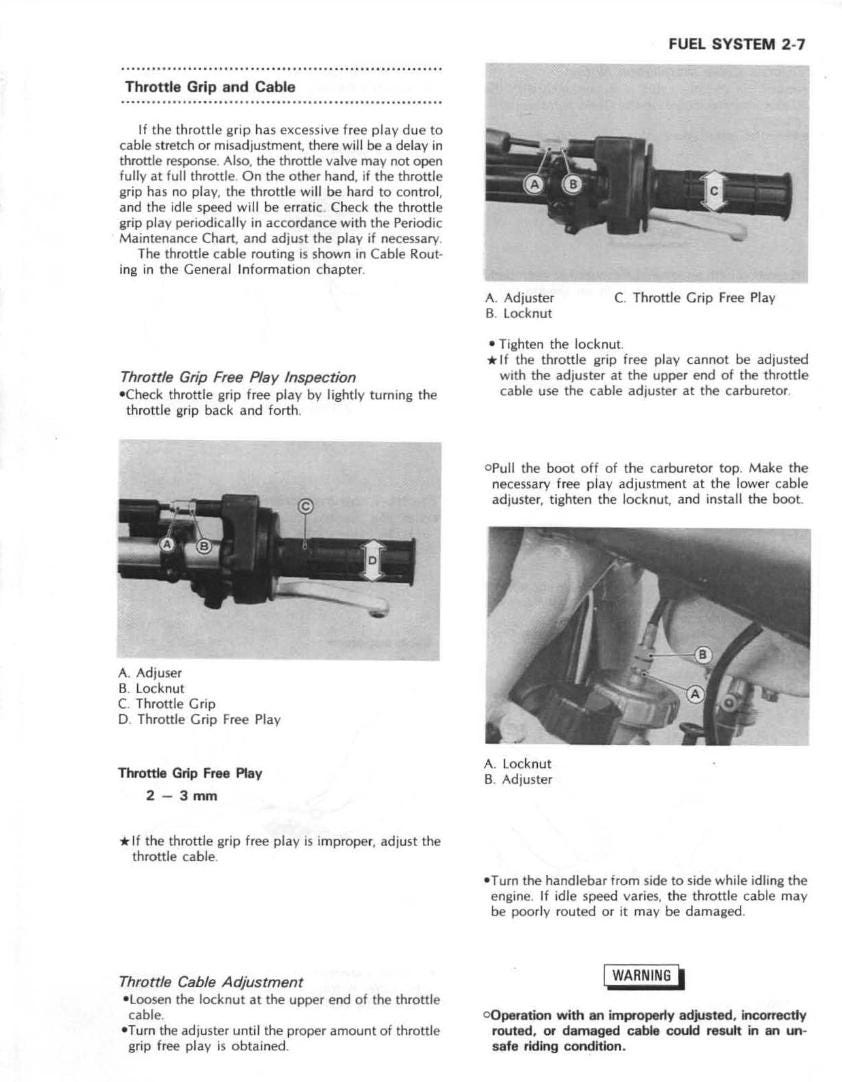
Sample pages and table of contents can be seen in the third product picture, please make sure you are happy with the quality of the manuals before purchasing.
Features Chapters: General Information, Fuel System, Cooling System, Engine Top End, Engine Right Side, Engine Removal/Installation, Engine Bottom End/Transmission, Wheels/Tires, Final Drive, Brakes, Suspension, Steering, Electrical System, Appendix.
If you have any issues downloading/accessing your manual, please contact us so we can fix this for you.
Share



KX125 (1988-2004): Cycle World's Genuine "Braking Second to None" — A Long-Serving Motocross Weapon That Kept Refining Rather Than Reinventing
Cycle World's own contemporary May 1988 road test captures exactly what made this generation's launch year a genuine handling standout: "the '88 frame has a steeper head angle, a larger-diameter front downtube, a stronger aluminum swingarm and a shorter, stiffer rear axle. Altogether, these components make for a stable, solid platform that goes where it is pointed... straight-line stability at speed also is very good, second only in the 125 class to the 1988 YZ125. But the Kawasaki is second to none in braking control, feel and power." That same review confirms the genuine attention to detail Kawasaki packed into this year's model: "the large airbox has an adjustable air-inlet shutter on both sides; the footpegs have aggressive tops and are extra-wide to spread the load across the rider's instep... the rear brake pedal has a height adjuster and a folding tip."
Power comes from a 124cc liquid-cooled single-cylinder two-stroke engine with a case reed and power valve, an 8.39:1 compression ratio (per OEM Cycle's own 1988 factory spec sheet), fed through a Keihin PWK35 carburetor, run through a 6-speed transmission with wet multi-disc manual clutch and chain final drive. Enduro.team's own detailed platform history confirms this exact family shares genuine mechanical DNA with its bigger 250cc sibling: "the model is the 'little brother' of Kawasaki KX 250 and has a lot in common with it — in particular, the frame and chassis. Even the updates of both models took place in the same years." That same source flags a genuinely important detail worth knowing when sourcing service information across this long production span: "models should be considered starting from 1990 — it was then that the motorcycle received an inverted fork and features of modern cross-country models," meaning the earliest 1988-1989 bikes in your listed range ran genuinely different, non-inverted front-end hardware than the 1990-onward configuration.
CycleChaos' own detailed spec sheet, documenting the platform once it had settled into its long-running mid-life configuration, confirms a 54.0mm bore x 54.5mm stroke, delivering a claimed 41 hp at 11,500 rpm and roughly 20 lb-ft of torque at 10,500 rpm — genuinely strong output for the class, feeding a 36mm inverted telescopic cartridge fork with 18-way compression damping and a Uni-Trak single rear shock offering 4-way compression and 18-way rebound damping, both delivering 10.8 inches of travel. Braking used a single disc with two-piston calipers up front and a single disc rear. CycleChaos' own coverage of the final 2005 model year confirms genuinely incremental refinement continued right through the platform's last years: "carbon fiber crankcase reed valves and a Mikuni carburetor provide the 124cc single-cylinder power unit the necessary air-fuel mixture for dependable acceleration and fast throttle response... for the 2005 model, petal rotors have been added and make sure there's enough stopping force to tame the beast" — genuine detail evolution rather than wholesale redesign, in keeping with how Kawasaki managed this platform's entire multi-decade lifespan.
Autoevolution's own coverage of the later 2004-2005 model confirms the fundamental purpose and equipment stayed consistent from the earliest years of this range clear through to the very end: "without lights and blinkers, the bike could not run on paved roads... like smaller and larger KX models, it packed standard features, like a high-mounted front fender, wire-spoke wheels with off-road tires, a single seat, and a single exhaust pipe with a muffler mounted high on the right-hand side" — a genuinely dedicated closed-course competition machine throughout its entire production life, never intended for street use. Kawasaki's KX250F took over as the brand's quarter-liter motocross flagship starting in 2004, running alongside the KX125 before the two-stroke platform's production finally wound down around 2008-2009 in most markets.
This factory service manual covers the procedures, torque specs, and diagrams needed to keep a 1988-2004 KX125's two-stroke engine and driveline running the way it was built to.
-
Manual Sourcing
We strive to use freely available sources. Some manuals may be scans or photocopies of older originals. Sample previews are shown on the product page, please review them before purchase to ensure quality meets your needs.
-
Copyright
This material is shared in accordance with the GNU General Public License (GPL), GNU Lesser General Public License (LGPL), or designated as Freeware, all of which allow free and open distribution. Additional information is available on our Copyright & Content Disclaimer Page
-
Refunds
Due to the nature of digital products, all sales are final. We recommend reviewing the sample preview on the product page to ensure the manual meets your expectations before purchase. Refunds will not be issued for issues related to content quality already disclosed or shown in the preview.
