


Dr. E Manuals
Honda XR500R 1981-1982 Service Manual
Honda XR500R 1981-1982 Service Manual
Couldn't load pickup availability
Honda XR500R XR500 R 1981 - 1982 Service / Repair / Workshop Manual
Instant download after purchase, in PDF form, NOT a physical book.
This manual contains 229 pages in English Language, it is the only manual you will require to maintain, repair and service your Honda XR500R, using this manual you ensure that your motorbike is repaired to manufacturer standards / specification, whether you are using OEM or genuine Honda Parts.
Suits Models from 1981 and 1982.
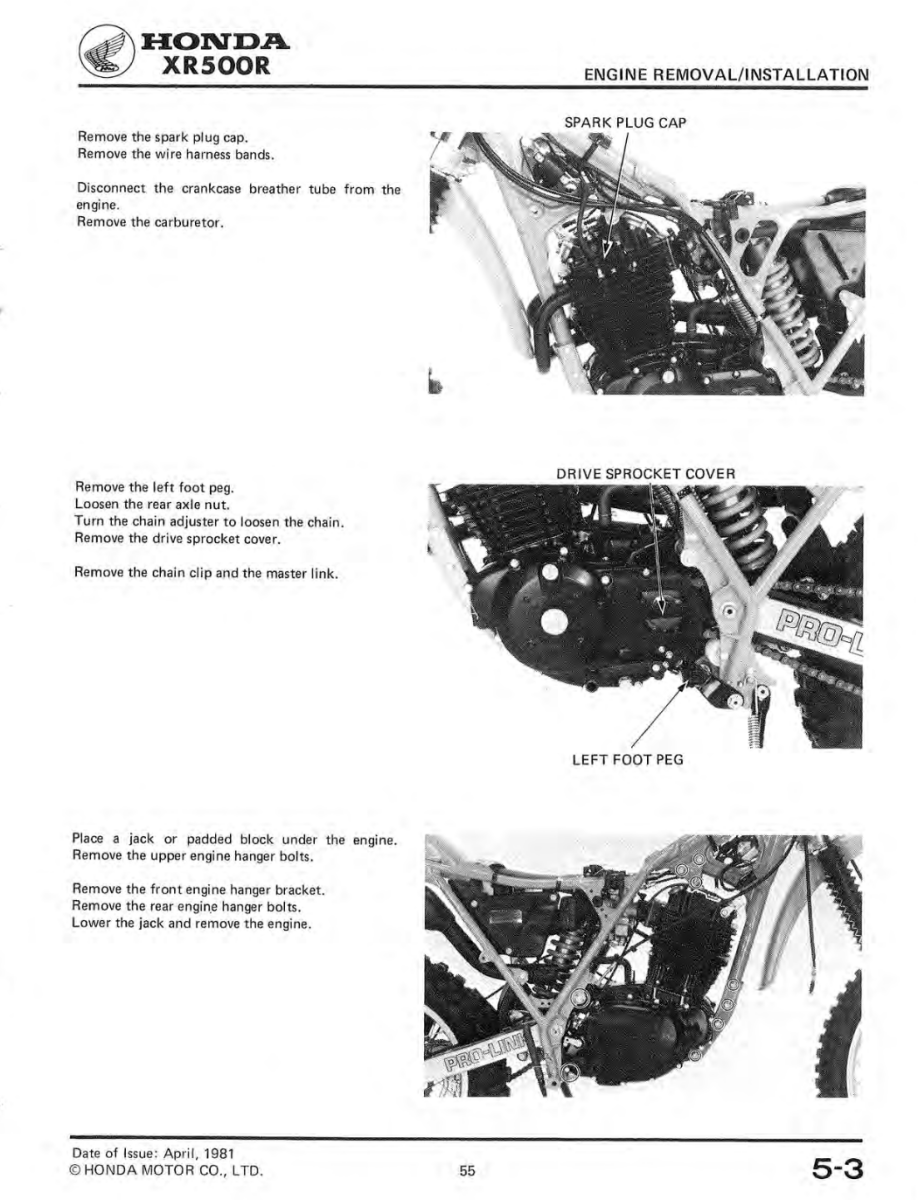
Sample pages and table of contents can be seen in the third product picture, please make sure you are happy with the quality of the manuals before purchasing.
Features Chapters: General Information, Lubrication, Maintenance, Fuel System, Engine Removal/Installation, Cylinder Head/Valves, Cylinder/Piston/Engine, Clutch/Oil Pump, AC Generator, Crankcase, Crankshaft/Balancer, Transmission, Front Wheel/Brake/Suspension/Steering/Chassis, Rear Wheel/Brake/Suspension, Rear Fender/Exhaust Pipe, Frical/Ignition System, Technical Features, Troubleshooting, '82 XR500R Addendum, XR500R European/General Type.
If you have any issues downloading/accessing your manual, please contact us so we can fix this for you.
Share




XR500R (1981-1982): "We're Not Used to Seeing Completely New Play or Enduro Bikes So Often" — Honda's Genuine Ground-Up 1981 Reinvention
Motorcyclespecs.co.za's own period road test frames this exact model year's arrival as a genuine industry surprise: "Honda's marketing philosophy differs from most motorcycle companies that try to fill an established need or want... even so, most people were surprised when Honda announced a completely new XR line for 1981. We're used to seeing completely new motocrossers every year or two, we're not used to seeing completely new play or enduro bikes so often. Three completely new XRs are offered; a 200, 250 and the subject of this test, a 500."
The genuine headline mechanical change, per that same contemporary review: "at the top of the new list is the frame with Pro-Link rear suspension. It's based on the system used on Honda's motocross bikes but none of the components interchange; frame material is mild steel, not chrome-moly like the track bikes; the swing arm is chrome-moly steel, not aluminum like the MXer." That review confirms Honda's engineers deliberately detuned the race-derived Pro-Link concept for a genuinely more durable, everyday enduro application rather than a straight transplant from the motocross line.
Power comes from a 498cc air-cooled single-cylinder four-stroke engine, OHC, with an 89.0mm x 80.0mm bore and stroke, fed through a 5-speed transmission with wet multi-plate clutch, delivering a claimed 36-37.5 hp at 6,500 rpm and roughly 30.6 lb-ft of torque at 5,500 rpm — CycleChaos' own spec sheet confirms a genuine top speed around 93 mph. Motorcyclespecs.co.za's own account details the genuine wheel-sizing changes that came alongside the new Pro-Link frame: "the 'Ride Red' folks also changed the front wheel dimensions too. The '81 XR came with a more conventional 21-inch front wheel, rather than a 23-inch front wheel. As for the rear wheel, Honda, for some strange and disturbing reason, fitted a 17-inch rear wheel, rather than go with the previous models 18-inch rear wheel" — a genuinely puzzling spec change even to period reviewers, worth knowing when sourcing correct tires and rims for a bike from this specific two-year window. That same review notes Honda left the engine itself essentially untouched for 1981 despite the comprehensive chassis overhaul, and that "the '82 XR 500 received cosmetic updates" as the only meaningful change for the second and final model year of this specific frame generation.
Suspension consisted of a 37mm Showa telescopic fork with 224mm of travel up front, paired with the new Pro-Link single-shock rear end, with braking handled by drum brakes at both wheels — genuinely simple, field-serviceable hardware in keeping with the XR line's reputation for durability, before Honda's subsequent 1983 update brought RFVC combustion chamber technology, dry-sump lubrication, and a front disc brake to the platform. Dry weight sits at a genuinely light 271 lbs, with a 20-litre (5.28-gallon) fuel tank supporting long-range enduro riding.
This factory service manual covers the procedures, torque specs, and diagrams needed to keep a 1981-1982 XR500R's Pro-Link-equipped engine and driveline running the way it was built to.
-
Manual Sourcing
We strive to use freely available sources. Some manuals may be scans or photocopies of older originals. Sample previews are shown on the product page, please review them before purchase to ensure quality meets your needs.
-
Copyright
This material is shared in accordance with the GNU General Public License (GPL), GNU Lesser General Public License (LGPL), or designated as Freeware, all of which allow free and open distribution. Additional information is available on our Copyright & Content Disclaimer Page
-
Refunds
Due to the nature of digital products, all sales are final. We recommend reviewing the sample preview on the product page to ensure the manual meets your expectations before purchase. Refunds will not be issued for issues related to content quality already disclosed or shown in the preview.
