


Dr. E Manuals
Honda PX50 1981-1985 Service Manual
Honda PX50 1981-1985 Service Manual
Couldn't load pickup availability
1981-1985 Honda PX50 Service / Repair / Workshop Manual
Instant download after purchase, in PDF form, NOT a physical book.
This manual contains 390 pages in English Language, it is the only manual you will require to maintain, repair and service your Honda PX50.
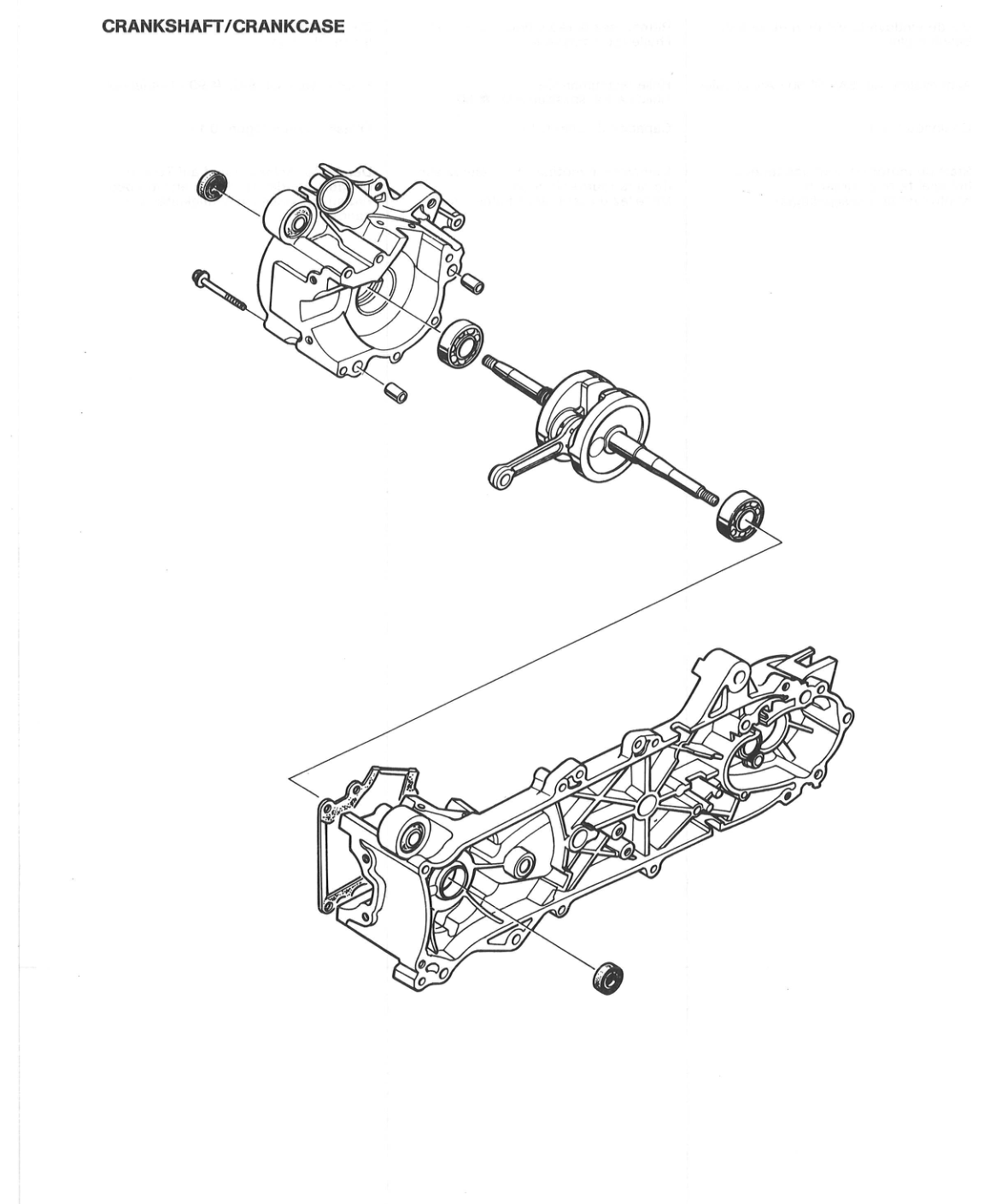
Sample pages and table of contents can be seen in the third product picture, please make sure you are happy with the quality of the manuals before purchasing.
Suits Models from 1981, 1982, 1983, 1984, 1985
If you have any issues downloading/accessing your manual, please contact us so we can fix this for you.
Share


PX50 (1981): A Genuinely Simple, Automatic-Transmission Two-Stroke, Built at a Turning Point in Honda's Own Approach to Mopeds
CycleChaos' own confirmed factory specification sheet establishes exactly what genuine architecture this bike ran, distinct from Honda's other small-displacement moped families of the same era: "the Honda PX50 was a single cylinder, two-stroke Moped motorcycle produced by Honda in 1981... the engine was an air-cooled single cylinder, two-stroke. The bike has an automatic transmission." That distinction matters directly against Honda's own broader moped lineage — many of Honda's contemporaneous small mopeds, including the long-running PC50, deliberately ran genuine four-stroke engines specifically because, per Wikipedia's own account of that sibling model, "Soichiro Honda disliked the sharp noise of two-stroke engines" and preferred the smoother, oil-mixing-free operation of a four-stroke design. The PX50's two-stroke architecture places it instead alongside Honda's parallel line of two-stroke small-displacement mopeds, like the contemporaneous Express (NC50) family and MT50, rather than the historic four-stroke P50/PC50/SH50 lineage.
Power comes from a 49cc air-cooled single-cylinder two-stroke engine, delivering a claimed 2.55 hp (1.9 kW) at 5,000 rpm and roughly 0.44 lb-ft (0.6 Nm) of torque at 3,500 rpm, run through a genuine automatic transmission — a real, deliberately approachable drivetrain requiring no manual gear selection or clutch coordination, in keeping with the fundamental appeal of the entire moped category this bike belongs to. That output places the PX50 firmly within the same modest, legally-restricted performance envelope as most of Honda's contemporaneous small mopeds of this exact era — for genuine comparison, the closely related two-stroke MT50 of the same period delivered a similarly modest 2.55bhp at a considerably higher 6,500rpm through a manual 5-speed gearbox instead, illustrating just how differently Honda tuned mechanically related small-displacement engines depending on whether a given model was built for genuine ease-of-use (automatic transmission, like this PX50) or more sporting, rider-engaged operation.
Because Honda produced an unusually large family of visually and mechanically related 49cc mopeds throughout the late 1970s and early 1980s — the P50, PA50 (Hobbit/Camino), PC50, MT50, CT50 Motra, and the Express family among them — each running genuinely distinct engine architecture, transmission type, and frame construction despite sharing a broadly similar displacement class and market positioning, correct identification of the PX50's specific model designation against its frame and engine serial numbers remains essential before assuming any parts interchange with these superficially similar siblings. The genuinely simple mechanical layout typical of this entire moped generation — a small two-stroke single, automatic clutch engagement, and drum brakes at both wheels — made these machines straightforward for home mechanics and small dealerships alike to service throughout their working lives, a real practical advantage that's helped keep many surviving examples from this era in active use decades after production ended.
This factory service manual covers the procedures, torque specs, and diagrams needed to keep a 1981-1985 PX50's two-stroke engine and driveline running the way it was built to.
-
Manual Sourcing
We strive to use freely available sources. Some manuals may be scans or photocopies of older originals. Sample previews are shown on the product page, please review them before purchase to ensure quality meets your needs.
-
Copyright
This material is shared in accordance with the GNU General Public License (GPL), GNU Lesser General Public License (LGPL), or designated as Freeware, all of which allow free and open distribution. Additional information is available on our Copyright & Content Disclaimer Page
-
Refunds
Due to the nature of digital products, all sales are final. We recommend reviewing the sample preview on the product page to ensure the manual meets your expectations before purchase. Refunds will not be issued for issues related to content quality already disclosed or shown in the preview.
