


Dr. E Manuals
Honda CB750 F2 1992-2001 Service Manual
Honda CB750 F2 1992-2001 Service Manual
Couldn't load pickup availability
Honda CB750 F2 1992-2001 Service / Repair / Workshop Manual
Instant download after purchase, in PDF form, NOT a physical book.
This manual contains 201 pages in English Language, it is the only manual you will require to maintain, repair and service your Honda CB750 F2, using this manual you ensure that your motorbike is repaired to manufacturer standards / specification, whether you are using OEM or genuine Honda Parts.
Suits Models from 1992, 1993, 1994, 1995, 1996, 1997, 1998, 1999, 2000 and 2001.
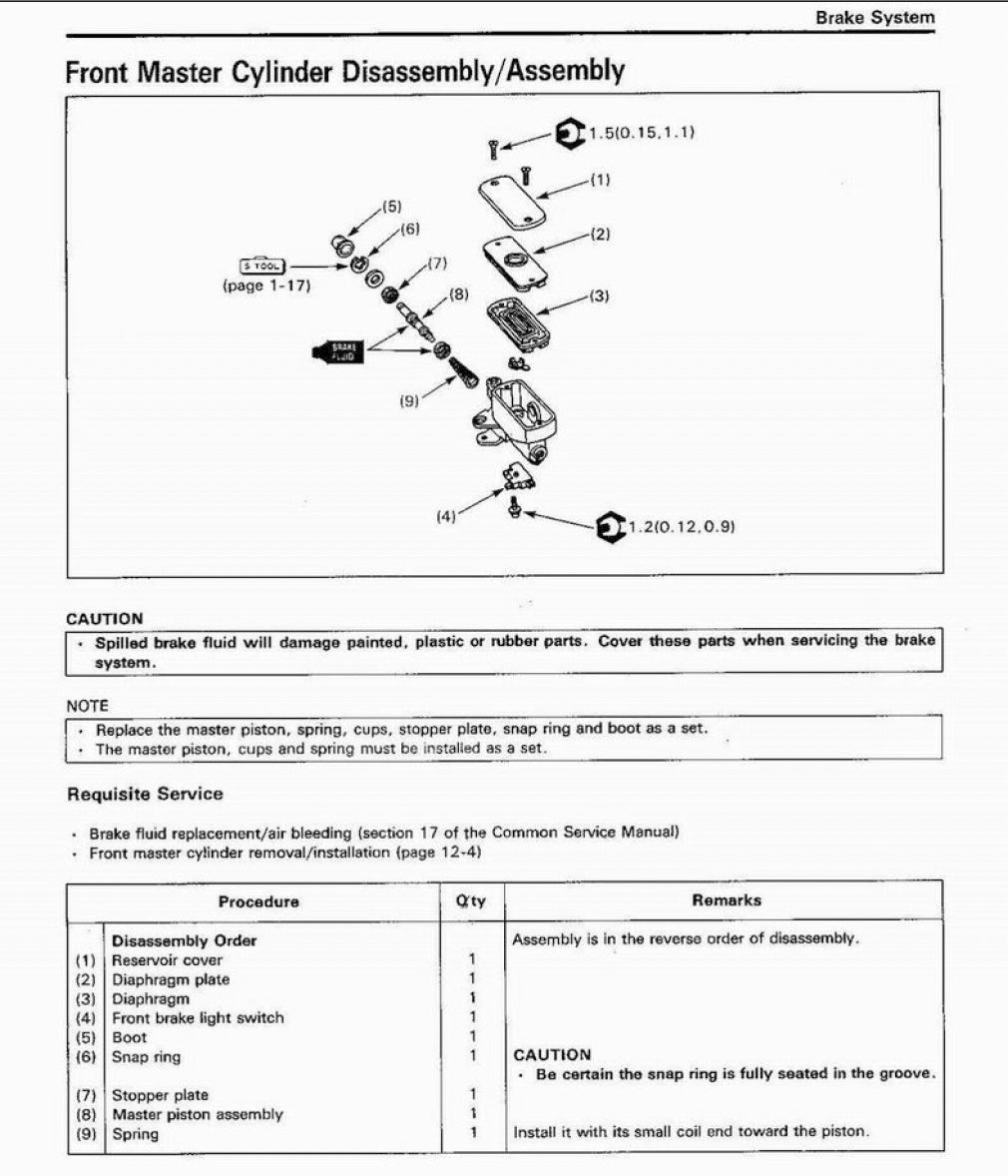
Sample pages and table of contents can be seen in the third product picture, please make sure you are happy with the quality of the manuals before purchasing.
Features Chapters: General Information, Frame/Body Panels/Exhaust System, Maintenance, Lubrication System, Fuel System, Engine Removal/Installation, Cylinder Head/Cylinder/Piston, Clutch/Gearshift Linkage, Crankshaft/Transmission, Front Wheel/Suspension/Steering, Rear Wheel/Suspension, Brake System, Charging System/Alternator, Ignition System, Electric Starter/Starter Clutch, Lights/Meters/Switches, Wiring Diagram, Toubleshooting.
If you have any issues downloading/accessing your manual, please contact us so we can fix this for you.
Share




CB750F2 Seven Fifty (1992-2001): "Not the Most Exciting Motorcycle to Leave the Honda Factory," But Genuinely Dependable
MCN's own review sums up the Seven Fifty's whole personality in one honest line: "not the most exciting motorcycle to leave the Honda factory but competent." Autoevolution's own model history is clear about the genuine gap between this bike and its famous namesake: "when it first re-appeared in 1992, the Honda CB750F2 Seven Fifty was a rather different machine compared to its 1960s namesake, which was the first real superbike that revolutionized the biking world" — this wasn't a genuine successor to the original CB750, just a bike sharing the same displacement badge, built specifically as a stopgap. Autoevolution's own account notes the F2's role directly: Honda "announced a Super Sport F1 version that featured a sportier look, while the F2 model was a different story, with a completely revised engine that hoped to stick to the customers until Honda's sixteen-valve twin-cam range was ready to enter the market."
Power comes from a 747cc air-cooled inline-four, fed by four VE-type carburetors, delivering a claimed 73 hp at 8,500 rpm and roughly 46 lb-ft of torque at 7,500 rpm. The chassis uses a genuinely straightforward steel tube cradle frame joining a dual rear shock system to a conventional telescopic front fork based directly on the contemporary CBR600's units — no radical engineering ambitions, just proven, well-understood componentry assembled into a dependable everyday machine.
What's genuinely remarkable about this bike's ten-year production run is how little changed: autoevolution's own year-by-year entries for 1994, 1995, 1996, 1997, 1999, 2000, and 2001 all report identical figures — the same 73 hp, same 46 lb-ft, same fundamental specification, with autoevolution's own account for the later years stating plainly the bike "didn't feature any changes whatsoever and packed the same technical specification and capabilities as its predecessors." Styling stayed consistently classic throughout: a large round chromed headlamp, a deep paint finish, a chromed exhaust system with megaphone-styled mufflers, a dual seat with a passenger grab handle, lightweight cast aluminum wheels, a wide handlebar, and an analog instrument cluster. Autoevolution's own review frames the intended buyer precisely: "the CB Seven Fifty was a perfect commuter or an occasional weekend bike made for riders who enjoyed a cruising machine that was not all about power," with an easy-to-operate center stand and aluminum passenger grab rail adding genuine everyday practicality. This platform ran essentially unchanged across a full decade — a genuine testament to how well Honda got the fundamental formula right the first time, even if it never chased excitement.
This factory service manual covers the procedures, torque specs, and diagrams needed to keep a 1992-2001 CB750F2 Seven Fifty running the way it was built to.
-
Manual Sourcing
We strive to use freely available sources. Some manuals may be scans or photocopies of older originals. Sample previews are shown on the product page, please review them before purchase to ensure quality meets your needs.
-
Copyright
This material is shared in accordance with the GNU General Public License (GPL), GNU Lesser General Public License (LGPL), or designated as Freeware, all of which allow free and open distribution. Additional information is available on our Copyright & Content Disclaimer Page
-
Refunds
Due to the nature of digital products, all sales are final. We recommend reviewing the sample preview on the product page to ensure the manual meets your expectations before purchase. Refunds will not be issued for issues related to content quality already disclosed or shown in the preview.
