


Dr. E Manuals
Honda CB100 CB125 CL100 SL100 CD125 SL125 Service Manual
Honda CB100 CB125 CL100 SL100 CD125 SL125 Service Manual
Couldn't load pickup availability
Honda CB100 CB125 CL100 SL100 CD125 SL125 Service / Repair / Workshop Manual
Instant download after purchase, in PDF form, NOT a physical book.
This service manual contains 101 pages in English Language, it is the only manual you will require to maintain, repair and service your Honda CB, CD or SL, using this manual you ensure that your motorbike is repaired to manufacturer standards / specification, whether you are using OEM or genuine Honda Parts.
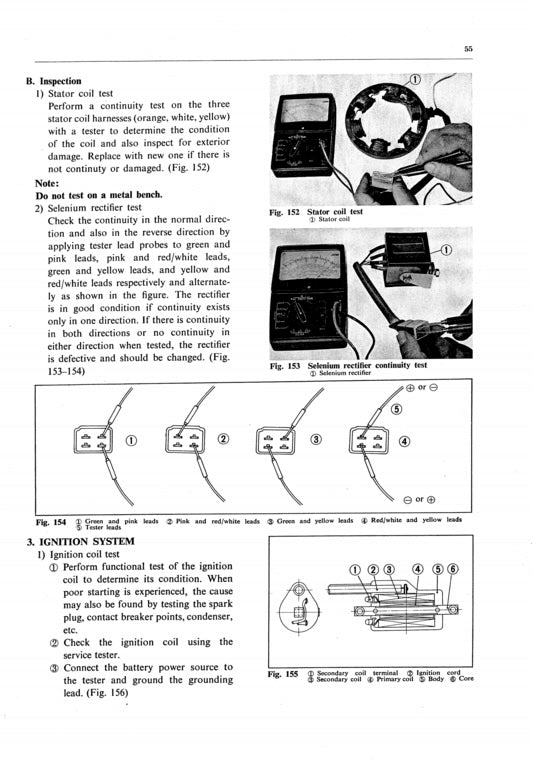
Sample pages and table of contents can be seen in the third product picture, please make sure you are happy with the quality of the manuals before purchasing.
If you have any issues downloading/accessing your manual, please contact us so we can fix this for you.
Share



CB100/CB125/CL100/SL100/CD125/SL125 (1970-1975): Honda's Small-Single Family That Defined an Era of Learner Bikes
This shared-platform family covers one of Honda's most prolific small-displacement runs of the early 1970s — a lineup built around two closely related OHC single-cylinder engine sizes, dressed in three genuinely different bodystyles depending on which model badge a bike carried. The CB100 and CB125 handled street-standard duty; the CL100 and SL100 (and their SL125 sibling) covered scrambler and street-scrambler styling with high pipes and knobby-adjacent tires; and the CD125 filled the economy-commuter role — all sharing enough underlying mechanical DNA that a single factory workshop manual covers the whole family.
The 100cc-class machines (CB100, CL100, SL100) ran a 99cc air-cooled OHC single, delivering a claimed 11.26 hp at 10,500 rpm and a genuine 60 mph top speed on the CB100 — respectable performance for a bike aimed squarely at new riders and budget-conscious commuters. The 125cc-class machines (CB125, CD125, SL125) stepped up displacement for more low-end pull and a taller cruising speed, while retaining the same fundamentally simple, easy-to-maintain single-cylinder architecture that made this entire family popular with first-time owners and shops alike. Both displacement classes ran through a 24mm carburetor and kick-start-only ignition typical of the era, with points-and-condenser electrical systems that owners of surviving examples still service today using the same basic diagnostic approach: verify spark at the plug, check the points, then work backward through the coil and condenser if the fault persists.
Genuine model-year distinctions run through this family in a way any technician working on one needs to know: the CB100 ran largely unchanged from 1970-1973, the CL100 (including the higher-output CL100S variant) covered the same span, the CB125S took over in 1973 running through 1975, and the SL125A covered 1971-1973 — with carburetor specifications changing more significantly on later CB125S production (Clymer's own combined manual notes this update applies "good up until 1978" before further carb changes came in 1980-1982, suggesting some model-year variants extended past this manual's core coverage). Because these bikes share cam chains, carburetors, ignition switches, and other core components across the family, parts interchange is genuinely common — but exact specifications like float height and jetting still vary by model and year, making it worth cross-referencing the specific bike against the manual's model-specific sections rather than assuming identical settings across the whole range.
This factory service manual covers the procedures, torque specs, and diagrams needed to keep a CB100/CB125/CL100/SL100/CD125/SL125 running the way it was built to.
-
Manual Sourcing
We strive to use freely available sources. Some manuals may be scans or photocopies of older originals. Sample previews are shown on the product page, please review them before purchase to ensure quality meets your needs.
-
Copyright
This material is shared in accordance with the GNU General Public License (GPL), GNU Lesser General Public License (LGPL), or designated as Freeware, all of which allow free and open distribution. Additional information is available on our Copyright & Content Disclaimer Page
-
Refunds
Due to the nature of digital products, all sales are final. We recommend reviewing the sample preview on the product page to ensure the manual meets your expectations before purchase. Refunds will not be issued for issues related to content quality already disclosed or shown in the preview.
